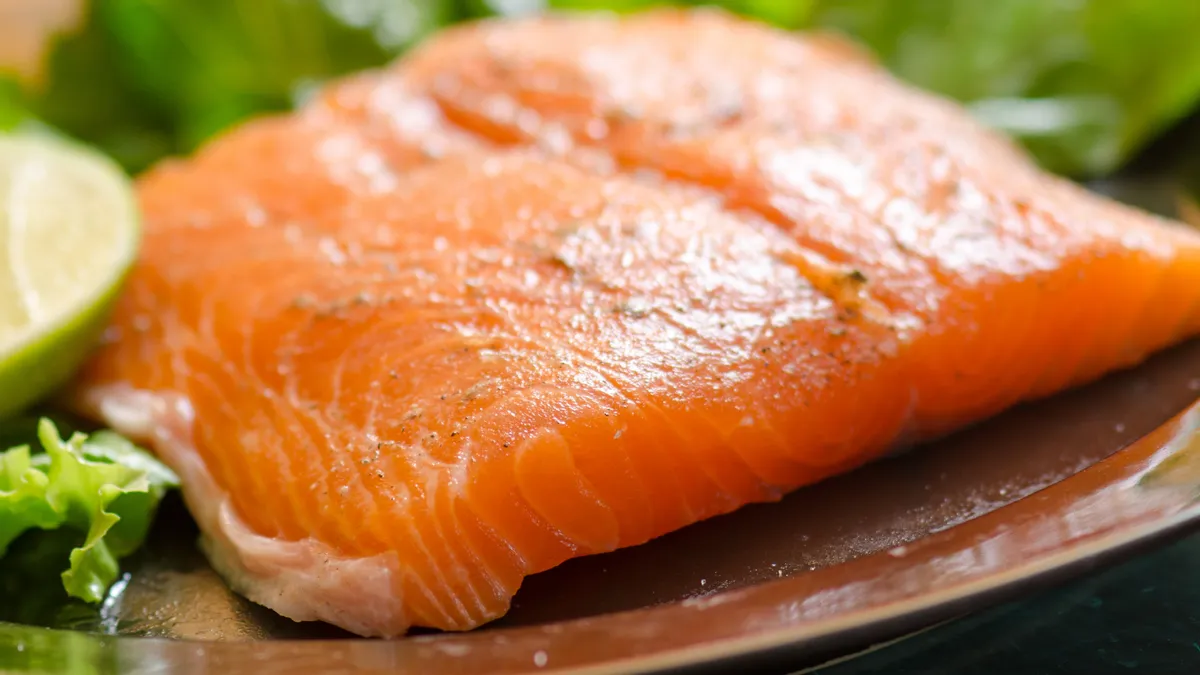
Fact Check: Are U.S. Grocery Stores Selling 3D-Printed Salmon?
Claim:
Certain grocery stores across the United States are now stocking 3D-printed salmon produced by an Israeli food tech company.
Rating: True
In early October, viral social media posts began circulating with claims that a 3D-printed salmon product had officially arrived in American supermarkets. For instance, a widely shared YouTube video asserted that “the first 3D-printed salmon just hit U.S. grocery shelves.” The video attributed the manufacturing to Steakholder Foods, an Israeli company, and pointed out that the packaging lacked a specific “3D-printed” label while containing a chemical commonly found in laxatives. Similar claims quickly spread across Facebook and Instagram, prompting curious readers to seek verification.
The rumor is indeed accurate. On September 3, Steakholder Foods—known for developing 3D-printing technology tailored for alternative proteins—announced the rollout of its 3D-printed, plant-based meat and fish alternatives, including salmon, to retail outlets in the Northeastern U.S. under its “Perfecta” brand name.
While the exact retailers carrying the product remain unconfirmed (and Steakholder Foods has not responded to requests for clarification), the company’s official product launch supports the validity of the claim.
How the Product is Made
Steakholder Foods utilizes plant-based ingredients combined with cellular innovation to craft its 3D-printed alternatives.
Regulatory bodies like the U.S. Food and Drug Administration (FDA) and the U.S. Department of Agriculture’s Food Safety and Inspection Service (FSIS) do have strict labeling and oversight rules for “lab-grown” meat. However, those regulations apply strictly to products derived from cultured animal cells. Because Perfecta items are made from plant-based components rather than animal cells, they fall under a different regulatory framework.
An FDA spokesperson clarified in an email that the product utilizes plant-based ingredients processed via 3D printing and does not involve cultured animal cells. While the FDA does not officially “approve” finished food items, it requires all ingredients and additives used in food production to be proven safe beforehand. The FSIS confirmed that its jurisdiction covers traditional meat, poultry, and egg products, deferring other queries to the FDA.
Packaging and Ingredients
A look at the product packaging on the official website shows no explicit mention of “3D printing” or cultured cells. Instead, the boxes clearly market the items as “premium plant meat” and “plant-based.”
To achieve a realistic texture, plant-based meat manufacturers typically rely on advanced processing methods. According to the Good Food Institute, techniques range from traditional extrusion (applying shear stress to align proteins into a fibrous texture) to newer methods like kneading, folding, layering, and 3D printing.
As for the claim regarding laxatives, the 3D-printed salmon’s ingredient list does include methylcellulose, a compound that is indeed used in some laxatives. In the context of plant-based meats, however, methylcellulose functions as a binding agent that holds ingredients together while successfully mimicking the mouthfeel and texture of conventional meat. The FDA has officially approved the use of methylcellulose for this purpose in food products.