A news report and subsequent inquiries by Democratic lawmakers have raised questions about whether President Trump is the unnamed 79-year-old individual receiving a still-unapproved obesity drug through a Food and Drug Administration program. While the White House has stated that the individual is not the president, speculation persists.
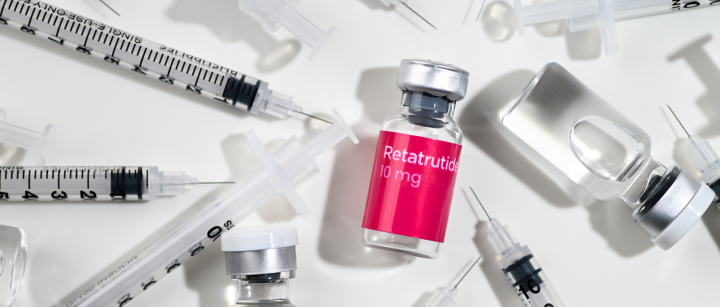
This speculation arose following an article by STAT, which reported that a single, apparently well-connected 79-year-old man was the sole recipient of Eli Lilly’s experimental weight-loss drug, retatrutide, via the FDA’s compassionate use program. This program allows patients with serious illnesses to access unapproved drugs outside of clinical trials, provided the drug company agrees. STAT cited anonymous sources who suggested the request drew the attention of high-ranking health officials, implying the recipient was influential. The article noted the unusual nature of providing the drug to just one person for obesity, a widespread condition, as manufacturers typically establish such programs for larger groups of patients.
The timing of the report coincided with President Trump’s upcoming 80th birthday, though STAT specified the request was made when the individual was 79. Trump’s recent physical revealed a weight of 238 pounds, an increase from his previous checkup. He has also publicly stated he has never taken a weight-loss drug but “probably should.”
STAT asked the White House for comment on whether Trump was the recipient, and while an initial response was not definitive, the White House later denied it. The STAT reporter, Lizzy Lawrence, posted on X that she had not received a direct answer when she inquired.
White House Senior Deputy Press Secretary Kush Desai responded on X, stating, “Because this has to be spelled out for @LizzyLaw_, who has proven herself to be an unserious gossip columnist, this application was not for the President.” White House Director of Communications Steven Cheung also commented, accusing Lawrence of being “thirsty for clicks and peddling falsehoods.”
Despite these denials, Democratic lawmakers have continued to question the situation. Representative Ted Lieu, during a press conference, stated that the report of a single, high-profile individual receiving a drug under compassionate use for a serious illness necessitates transparency regarding Donald Trump’s health. Senator Maggie Hassan penned a letter to Health and Human Services Secretary Robert F. Kennedy Jr., expressing concern about reports of potential rule-bending and political pressure to grant free access to an exclusive prescription drug to a well-connected individual. She echoed the sentiment that reporting suggests the recipient was either the president or someone close to him.
A spokesperson for Senator Hassan explained that their continued questioning stems from a history of the Trump administration misleading the public and a pattern of corruption and self-dealing. They emphasized that Hassan is seeking answers on whether the president, another administration official, or a Trump associate is receiving this special access while families struggle with prescription costs. Lieu’s office did not respond to an inquiry.
The FDA’s compassionate use program, also known as expanded access, is a pathway for patients with serious or life-threatening conditions to obtain investigational medical products. This is distinct from the “Right to Try” law, signed by Trump in 2018, which allows terminally ill patients access to experimental drugs without FDA approval. The compassionate use program has a high approval rate, with the FDA approving 99% of approximately 18,000 single-patient requests between fiscal years 2019 and 2023.
Retatrutide, the drug in question, has shown significant effectiveness in clinical trials for weight loss. Eli Lilly reported that participants in a phase 3 trial lost between 19% and 28.3% of their body weight on average after 80 weeks of treatment with the drug. The company also noted improvements in related conditions like knee osteoarthritis pain and obstructive sleep apnea. Currently, the drug is only available to participants in clinical trials.
STAT reported that the request for retatrutide was made by Ranganath Muniyappa, a senior clinician at the National Institutes of Health, to treat a patient with severe obesity complicated by obstructive sleep apnea and pulmonary hypertension, a potentially life-threatening condition. Trump’s most recent medical summary does not mention these specific conditions. It is worth noting that in 2020, Trump did receive an experimental antibody treatment through a similar FDA program after testing positive for COVID-19.
Reference