The Claim
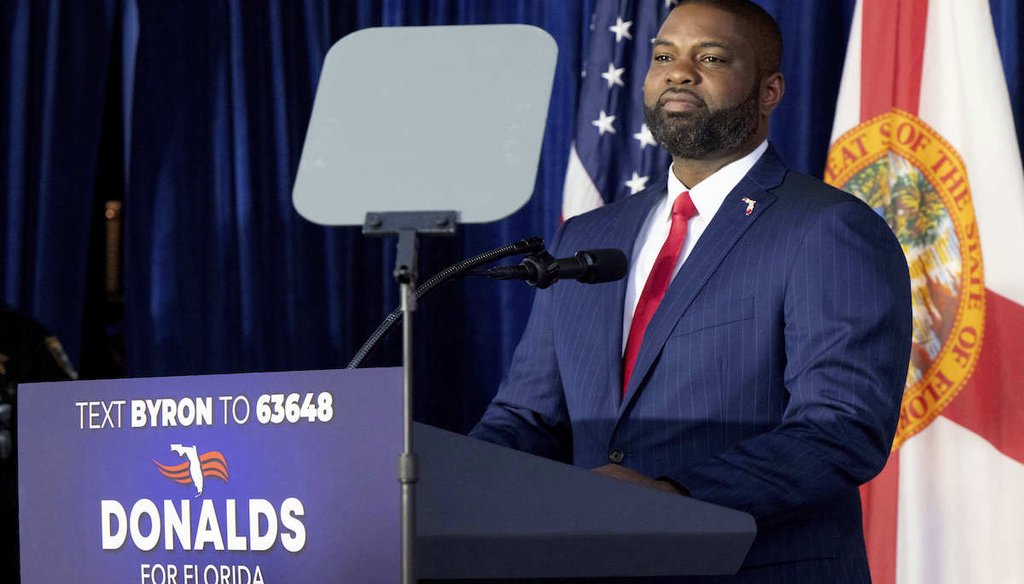
In the 2026 Florida governor’s race, Republican candidate Jay Collins claimed that Congressman Byron Donalds voted against military pay raises, including what he described as “the largest pay raise for the military in 22 years.”
This claim quickly gained traction in political messaging and campaign materials, raising questions about Donalds’ record on supporting U.S. service members.
What the Evidence Shows
The claim is based on Byron Donalds’ voting record on the National Defense Authorization Act (NDAA) — a major annual defense bill passed by Congress.
According to verified reporting:
- Donalds voted against the NDAA in 2022, 2023, and 2025
- He voted in favor of the NDAA in 2021 and 2024
- Each of these bills included military pay raises
However, this is where the context becomes critical.
The NDAA is not a single-issue bill. It is a massive, multi-thousand-page legislative package that:
- Authorizes hundreds of billions of dollars in defense spending
- Sets military salaries, benefits, and operations funding
- Often includes non-military provisions such as surveillance laws, foreign aid, climate initiatives, and policy riders
Experts emphasize that voting against such a bill cannot be reduced to a single issue like pay raises.
As defense policy expert Elaine McCusker explained, isolating one element is misleading because the legislation covers a broad spectrum of policies.
Why Donalds Voted Against Some NDAA Bills
Donalds’ campaign and public statements indicate his opposition was tied to specific provisions within the bills, not opposition to military pay.
For example:
- In 2023, he opposed provisions related to the Foreign Intelligence Surveillance Act (FISA)
- Other objections included:
- Ukraine funding
- Diversity, equity, and inclusion (DEI) programs
- Climate-related Pentagon policies
- Broader federal spending concerns
These are policy disagreements unrelated to military compensation itself.
The Key Detail Often Missed
One of the most cited points in the claim is the 5.2% military pay raise in 2023, the largest in over 20 years.
While it is true that:
- Donalds voted against that bill
- The bill included that pay raise
It is misleading to conclude that his vote was specifically against increasing military salaries.
In reality:
- The pay raise was just one component of a much larger legislative package
- Lawmakers frequently vote against NDAA bills for reasons unrelated to pay
Final Verdict: Mostly False
After reviewing the full voting record and legislative context, the claim is best categorized as:
Mostly False
- ✅ True: Donalds voted against three NDAA bills that included military pay raises
- ❌ Misleading: It implies he opposed pay raises themselves
- ⚠️ Missing context: His votes were based on broader policy disagreements within complex legislation
This type of claim is a classic example of cherry-picking legislative votes without context, which can distort the actual intent behind those votes.
Conclusion
The evidence shows that Byron Donalds did vote against certain defense bills that included military pay raises. However, portraying those votes as opposition to military pay is inaccurate.
The reality is more nuanced: his voting record reflects policy disagreements within large, multi-issue defense bills, not a direct stance against raising military salaries.
For voters, understanding this distinction is essential—especially in a high-stakes political race where messaging often simplifies complex legislative actions.