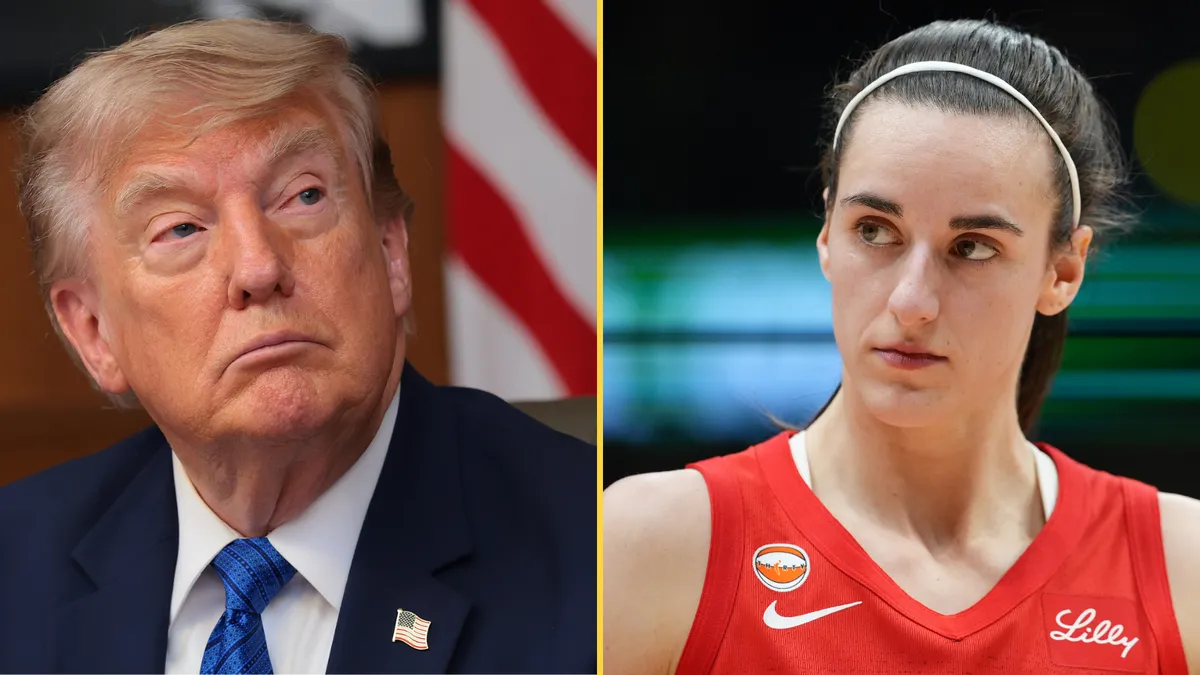
Claim: WNBA star Caitlin Clark delivered an uplifting public response after Donald Trump criticized her for being “too woke,” according to viral claims circulating in the summer of 2026.
Rating: False
During the summer of 2026, a fabricated story gained traction on social media, alleging that Donald Trump had publicly attacked WNBA player Caitlin Clark by calling her “too woke.” The viral posts claimed that Clark fired back with an inspiring speech before a packed arena, emphasizing community building, dignity, and opportunities for future generations.
Multiple Facebook groups shared this narrative, prompting inquiries from readers looking to verify its authenticity. However, an investigation reveals the story is entirely baseless. The narrative conflicts with Trump’s actual remarks regarding Clark, and linguistic analysis points to artificial intelligence generating the text. Consequently, the claim has been rated false.
Examining the Rumor
Extensive searches across major search engines—including Google, DuckDuckGo, Yahoo, and Bing—yielded no credible reports or media coverage of Trump criticizing Clark, nor of Clark responding with any such speech. Furthermore, a verbatim search for the quotes attributed to her returned no authentic records. Major news organizations like Reuters or The Associated Press would have widely covered such a high-profile exchange if it had actually occurred.
Clark’s verified social media profiles on X and Instagram show no mention of the alleged speech.
While the exact origin of the rumor remains unclear, identical text had previously surfaced in Indiana Fever fan groups nearly two months prior to the August posts. These posts often mimic breaking news formats to capture attention.
The Motive Behind the Fake Content
Creators of this type of viral fiction typically leverage social media users’ willingness to share emotional or politically charged narratives to drive traffic to external websites for ad revenue. For instance, the post that went viral in August linked directly to an online storefront selling t-shirts featuring one of Clark’s teammates, utilizing unverified merchandise.
The accounts sharing these stories have a history of distributing AI-generated clickbait, recycling manufactured narratives—such as fabricated quotes involving celebrities like George Clooney—and employing standard formulas characteristic of automated writing. AI detection tools, such as GPTZero and Pangram, also flagged the text as overwhelmingly likely to be machine-generated (though fact-checkers generally advise using such tools only as supplementary indicators).
Reality of the Relationship
A conflict between Trump and Clark is highly improbable based on their public track records. Clark consistently steers clear of political commentary; for instance, when pressed by reporters about teammate comments regarding sensitive sports regulations during a 2026 press conference, she maintained that such topics are strictly matters for the league rather than herself.
Furthermore, Trump has not criticized Clark. During public remarks concerning the 2026 FIFA World Cup, he actually defended the basketball star, stating that he felt she had been treated “rather rough.”
Ultimately, the viral story belongs to a genre of sentimental, fabricated internet folklore designed to mimic uplifting news—entirely detached from reality.