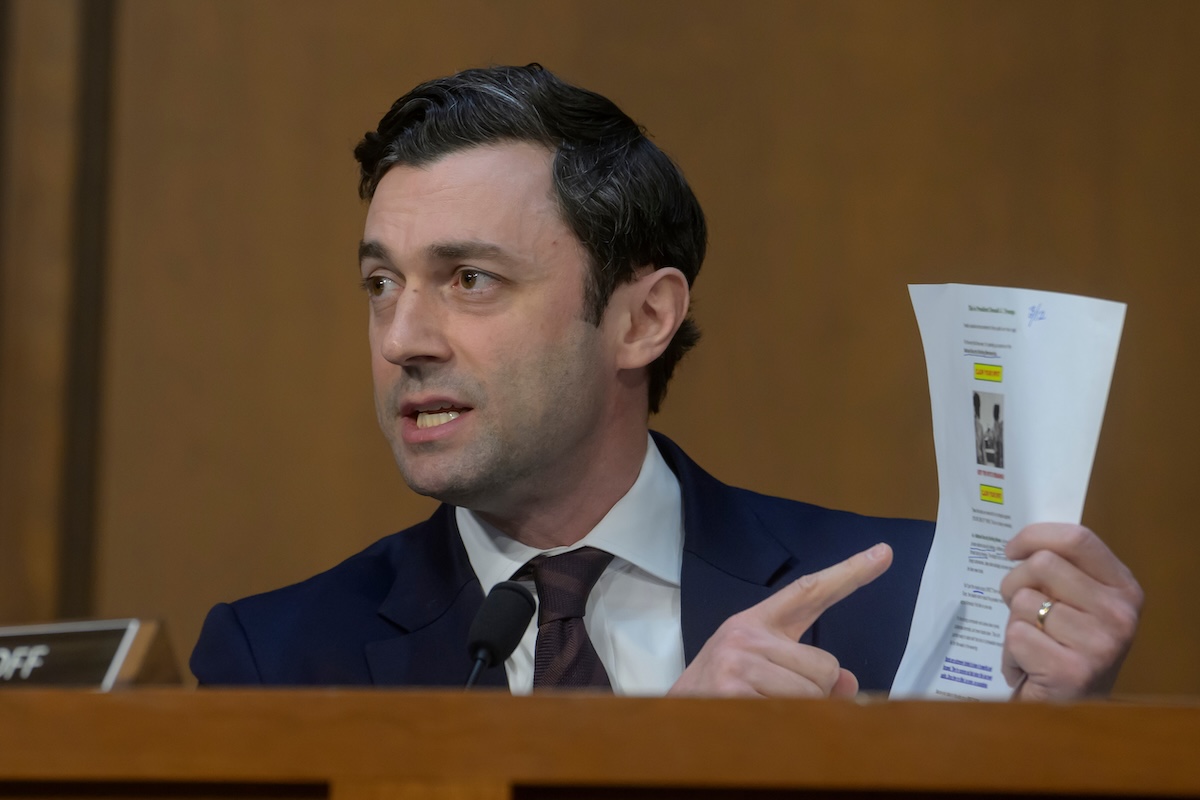
Democratic U.S. Sen. Jon Ossoff is highlighting the healthcare record of his Republican challenger, U.S. Rep. Mike Collins, asserting it has negatively impacted Georgians. During a campaign rally in Savannah on June 27, Ossoff stated, “Donald Trump and his puppet Mike Collins, they doubled health insurance premiums for more than a million Georgians and threw 300,000 Georgians off their insurance altogether.”
This assertion comes as the ability of U.S. adults to afford healthcare has reached a five-year low, and Americans increasingly view healthcare costs as a significant national problem. Ossoff’s campaign attributes his statement to Republican-led changes concerning the Affordable Care Act (ACA) that took effect in 2025.
The 2010 ACA established marketplaces for purchasing health insurance independent of employer-sponsored plans. Many marketplace users receive subsidies, which were expanded by former President Joe Biden during the pandemic. However, these enhanced subsidies expired at the end of 2025, a move supported by Trump. Healthcare experts had predicted substantial premium increases and a decline in marketplace plan enrollment. These predictions are now manifesting nationwide, including in Georgia.
Data indicates that Georgia saw a significant drop in marketplace enrollees, losing over a third of its participants between January 2025 and mid-April. Furthermore, a study by the consumer advocacy group Georgians for a Healthy Future revealed that Georgia’s net marketplace premiums have more than doubled, increasing by an average of nearly 114% since 2025, exceeding Ossoff’s stated figure.
Regarding the specific roles of Collins and Trump in these developments, the Collins campaign did not provide comment to PolitiFact. The White House directed inquiries to Trump’s statements on Truth Social regarding Ossoff, though no specific healthcare-related posts by Trump concerning Ossoff were identified.
Trump has consistently advocated for an alternative to the ACA, and during his presidency, efforts were made to reduce promotion of federal marketplace plans, cut subsidies, and introduce less expensive insurance options. While a Republican attempt to repeal the ACA in 2017 failed, with Collins not yet in office at that time, the law has remained in effect. The American Rescue Plan Act of 2021, signed by Biden, enhanced ACA subsidies, which were subsequently renewed by Congress through 2025.
A legislative package associated with Trump’s administration introduced significant alterations to the ACA marketplace, requiring annual verification of income and immigration status, unlike the previous automatic re-enrollment process. This legislation also did not extend the expiring subsidies that had helped keep premiums lower.
Collins has a history of opposition to the ACA, mirroring Trump’s stance. In July 2025, Collins voted in favor of the legislation that altered the ACA marketplace. He shared on X (formerly Twitter) that this vote ushered in a “golden age of America.” In October, protesters gathered outside Collins’ district office, citing his lack of support for healthcare subsidies. An analysis by KFF, a health policy think tank, indicated that Collins’ congressional district was projected to experience a 345% surge in benchmark plan premiums due to the expiring subsidies, the largest increase in the state. Collins stated in December to The Atlanta Journal-Constitution that “meaningful reforms to health care that increase competition and drive down premiums, not endless subsidies to the largest insurance companies on the globe” are necessary. In January, Collins voted against a bill solely focused on extending these subsidy credits, during the ACA’s open enrollment period.
The financial impact on Georgians is substantial. A June study by Manatt, a legal and consulting firm, analyzing 2026 open enrollment data, found that Georgia’s average net premiums rose by 121% from 2025, significantly higher than the national average increase of 58%. Georgians for a Healthy Future reported a similar trend, with average net monthly premiums nearly doubling from $69 to $148.10, a 114% increase.
These increased rates, according to Ossoff, affect over one million Georgians. Whitney Griggs, director of health policy at Georgians for a Healthy Future, noted that Georgia Access, the state’s ACA portal, had 1.5 million enrollees in 2025, with 95% receiving subsidies. Between January 2025 and mid-April, Georgia saw a 37% decrease in marketplace enrollees, representing over 500,000 fewer individuals. This figure includes both those who chose to disenroll and those whose coverage lapsed after a three-month grace period. The exact breakdown between voluntary non-enrollment and lapsed coverage is pending a report from the Centers for Medicare & Medicaid Services.
In response to a request for evidence backing Ossoff’s claim, his campaign pointed to a September 2025 KFF study. This study projected that the expiration of subsidies would more than double annual premiums for subsidized enrollees nationwide, with an average increase of 114% from $888 in 2025 to $1,904 in 2026. These increased premium figures became public in October 2025.
While the premium increases in Georgia align with a national trend, their impact is particularly significant in a state where Republicans have largely opposed expanding Medicaid coverage to more low-income individuals under 65. Griggs supports Ossoff’s assessment that 300,000 Georgians lost their insurance, stating, “These folks don’t have another choice.”
Ossoff’s assertion that Trump and Collins “doubled health insurance premiums for more than a million Georgians and threw 300,000 Georgians off their insurance altogether” uses strong language to describe actions taken by Trump and the Republican-led Congress to alter the ACA. Collins’ vote for the Trump-backed legislation that did not extend subsidies, and his subsequent vote against a bill to renew them, contributed to the increased costs for ACA marketplace plans. The lapse in subsidies has demonstrably impacted ACA consumers, including those in Georgia, leading to a 114% average increase in net monthly premiums and affecting over a million individuals. The data suggests that at least 300,000 have lost coverage due to rising costs, and potentially more. The statement is accurate but could benefit from further context.
Reference