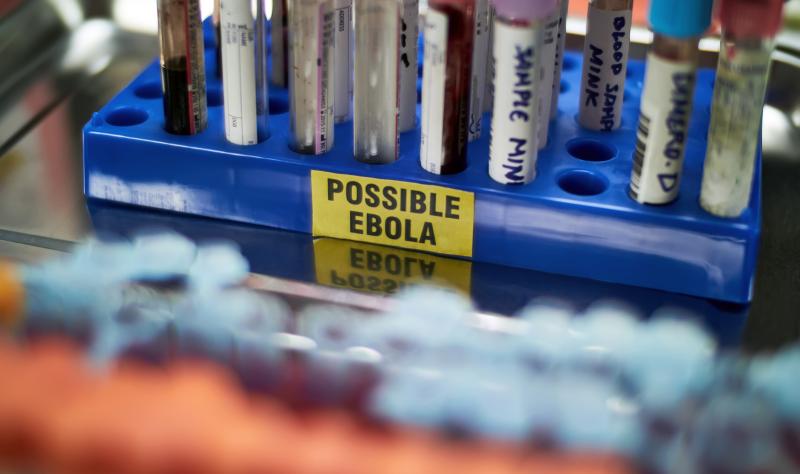
The Ebola outbreak in the Democratic Republic of the Congo (DRC) has now extended to a fourth province, according to recent media accounts.
Reports from the DRC’s National Institute of Biomedical Research indicate that a case was identified in Haut-Uele province. This occurred after an individual traveled to the region from Ituri province, which is currently the epicenter of the outbreak. Haut-Uele is situated north of Ituri and shares borders with South Sudan and the Central African Republic. Like Ituri, Haut-Uele experiences significant cross-border movement and trade, raising concerns among health officials about the virus’s potential to spread further.
Cases of Ebola have also been reported in North and South Kivu provinces. The current outbreak in the DRC has reached 1,274 confirmed cases, resulting in 360 deaths. Neighboring Uganda has recorded 20 confirmed cases and two deaths.
Although the outbreak was officially declared on May 15, its origins are thought to predate this date. Earlier this week, the head of the Africa Centres for Disease Control and Prevention highlighted that the current pace of contact tracing in the DRC is insufficient to effectively contain the viral hemorrhagic disease, which is transmitted through direct contact with the blood or bodily fluids of infected individuals, including those who have died.
In response to the escalating outbreak, the DRC government has implemented a ban on large public gatherings in the nation’s capital, Kinshasa. Similar restrictions are already in place in Ituri, North and South Kivu, Haut-Uele, Bas-Uele, and Tshopo provinces. While no cases have been reported in Kinshasa to date, a French doctor who had been treating Ebola patients spent a day in the city before traveling back to France and subsequently testing positive for the virus.
Investigational Monoclonal Antibody Doses Dispatched
In related developments, the Administration for Strategic Preparedness and Response (ASPR), a division of the U.S. Department of Health and Human Services, announced the dispatch of investigational doses of the monoclonal antibody MBP134 to the DRC and Uganda for compassionate use.
Developed by Mapp Biopharmaceuticals, MBP134 has shown efficacy against various Ebola virus species. Oxford University will be conducting a randomized clinical trial to further evaluate its effectiveness. ASPR stated in a news release that "Data generated during the outbreak response may help inform future regulatory review and potential pathways toward licensure.”
The current outbreak is caused by the Bundibugyo virus, for which no licensed treatments or vaccines are available. The upcoming clinical trial, slated to commence this week, will assess whether MBP134 and the antiviral remdesivir can reduce mortality in patients diagnosed with Bundibugyo virus disease, both individually and in combination.
Last week, Trump Administration officials indicated plans to request an additional $1.4 billion from Congress to address the outbreak. Reuters reported that $800 million of this funding would be allocated to supplies, treatments, and contact tracing efforts, as well as a controversial quarantine center in Kenya intended for Americans exposed to Ebola. The construction of this center has been temporarily halted by the Kenyan government due to protests. An additional $500 million is earmarked for initiatives aimed at preventing the virus’s introduction to the United States.
The president of the Infectious Diseases Society of America issued a statement describing the requested funds as "critically needed to save lives and contain the outbreak." However, the statement also raised questions regarding the proposed allocation, emphasizing the necessity of coordination across multiple government agencies, including the Centers for Disease Control and Prevention, the National Institute of Allergy and Infectious Diseases, and ASPR, to ensure the most impactful use of investments in the Ebola response.