President Donald Trump frequently argues that critics and the press overlook his administration’s major victories, particularly regarding the ongoing conflict with Iran.
In an August 16 social media post directed at a television anchor, Trump pointed to “the essential Denuclearization of Iran” as a premier administration success.
However, experts question whether Iran has actually been denuclearized.
When pressed for proof, White House representative Olivia Wales maintained that U.S. military strategy under Trump has “obliterated Iran’s nuclear facilities, sunk their navy, wiped out Iran’s defense industrial base, and continues to strangle what’s left of their economy with one of the most successful naval blockades in history.”
Wales asserted that the military campaign initiated on February 28 has left the United States and its allies markedly safer.
Because Tehran has blocked international inspectors from accessing its nuclear sites, verifying these claims remains difficult. Even so, nuclear policy analysts remain skeptical that anything resembling comprehensive denuclearization has been achieved during Trump’s second term.
While military strikes in 2025 dealt a blow to Iran’s atomic infrastructure, they fell short of dismantling it entirely, and subsequent operations this year have done little to further degrade Tehran’s nuclear potential. Crucially, the U.S. has not seized Iran’s existing reserves of highly enriched uranium, and the status of enrichment machinery remains uncertain.
Ironically, rather than deterring the regime, the military campaign may have solidified the position of Iranian hardliners, heightening the leadership’s resolve to acquire a nuclear deterrent and complicating future diplomatic resolutions.
“There is no solid evidence to support the idea that Iran has lost the desire to produce a nuclear weapon,” noted Richard Nephew, a senior research scholar at Columbia University’s School of International and Public Affairs. “If anything, there is more rhetoric in Iran about moving toward weapons rather than denuclearization.”
Denuclearization Stated as a Primary Goal, but Measurable Gains Remain Elusive
Washington has spent decades attempting to rein in Iran’s nuclear ambitions, a history that includes the 2015 multilateral accord providing sanctions relief in exchange for verified curbs on atomic activities—an agreement Trump subsequently abandoned in 2018.
Joint U.S. and Israeli air raids struck Iranian atomic sites in June 2025. Although Trump’s assertions that the strikes “obliterated” the facilities are overstated, the attacks undeniably disrupted Tehran’s timeline.
Nephew observed that the 2025 offensive substantially compromised the program, creating significant obstacles and time delays for Tehran as it attempts to rebuild under the constant threat of renewed attacks.
Citing the nuclear program as a primary justification for entering the conflict, Trump has repeatedly reinforced this objective in recent public appearances. During an August 11 interview with conservative commentator Wayne Allyn Root, Trump stated, “I’m in this thing for one primary reason — that Iran cannot have a nuclear weapon.”
Diplomatic efforts to resolve the hostilities remain deadlocked. A 60-day provisional agreement that temporarily paused fighting via a ceasefire lapsed on August 17, failing to spark the anticipated follow-up negotiations over Iran’s nuclear infrastructure.
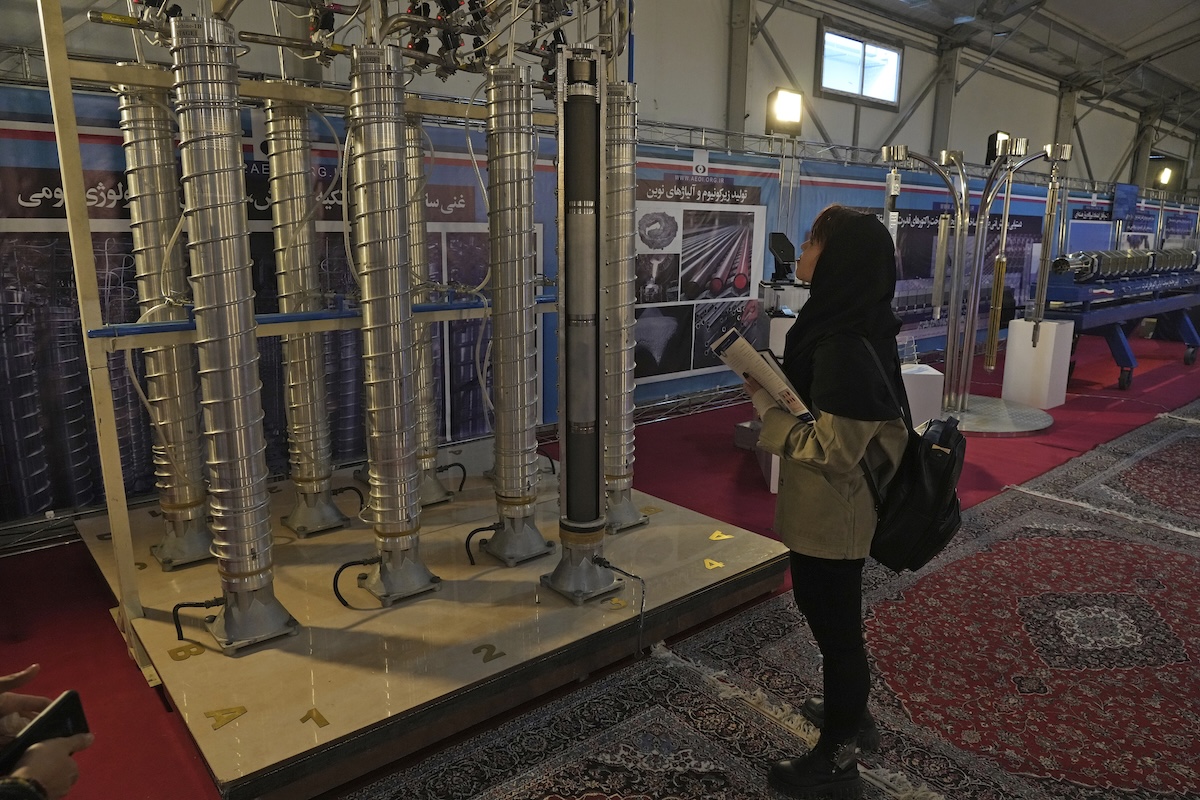
While active uranium enrichment plants are likely non-operational at present, Matthew Bunn, a nuclear policy expert at Harvard University’s Kennedy School, points out that Iran retains enough stockpiled highly enriched material to eventually manufacture numerous warheads. Furthermore, Tehran likely possesses advanced centrifuge components safely hidden away from conventional bunker-buster munitions.
Even if forced to start entirely from scratch, Nephew estimates that Iran’s accumulated technical expertise would allow it to produce a weapon within a few years.
Military Action Complicates Prospects for a Diplomatic Breakthrough
Analysts generally agree that halting Iran’s nuclear progression requires either military enforcement, diplomacy, or a hybrid approach. Unfortunately, the ongoing war has severely impaired the diplomatic track.
Physically seizing enriched material or destroying deeply buried machinery would necessitate a large-scale, high-risk deployment of ground troops—a perilous escalation that might still fail if the assets remain well-concealed.
Brendan Green, a political scientist and nuclear policy specialist at the University of Cincinnati, noted that because low-risk military options are essentially exhausted, a diplomatic resolution is the logical alternative. However, American military intervention has made Iran’s leadership far less receptive to negotiation.
Bunn warned that Iran’s leadership has shifted toward a more hardline stance heavily influenced by the Islamic Revolutionary Guard Corps. Having faced dual military campaigns from the U.S. and Israel, the regime is more determined than ever to secure a nuclear deterrent. Consequently, while a rigorous diplomatic pact with strict inspections would be the most effective way to lower risks, such an outcome is now highly improbable.
Achieving genuine, good-faith talks on denuclearization likely hinges on broader political transformation within Tehran, according to John Pike, director of the think tank globalsecurity.org.
To date, however, regime change—another stated objective of the conflict—remains unfulfilled.