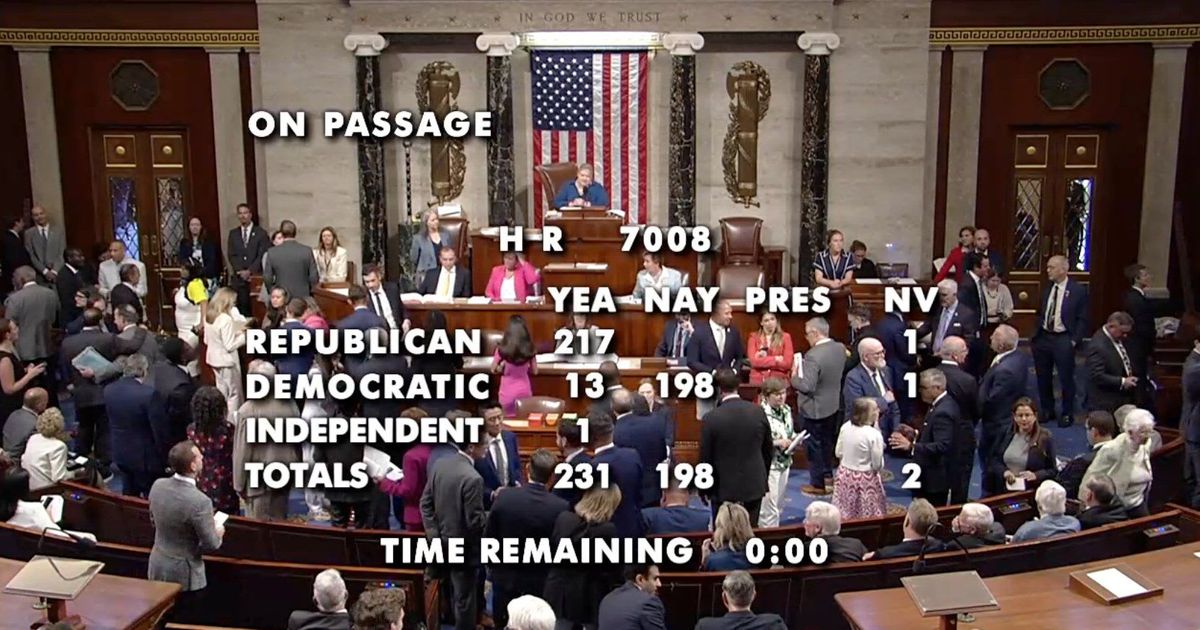
A viral claim suggesting that 198 House Democrats opposed a ban on congressional stock trading has circulated widely on social media platforms. This narrative gained traction through shared screenshots of a House roll call vote, indicating only 13 Democrats supported the bill while 198 voted against it.
The claim specifically references the vote on HR 7008, known as the ‘Stop Insider Trading Act,’ which the House of Representatives approved on July 22, 2026, with a vote of 232-198. The measure garnered support from 218 Republicans, 13 Democrats, and one independent, with 198 Democrats voting in opposition.
Concerns surrounding congressional stock trading have been a persistent public issue, stemming from lawmakers’ potential access to nonpublic information that could influence stock values, raising questions about insider trading and conflicts of interest.
While HR 7008 aimed to introduce new restrictions on stock trading for members of Congress and their spouses, critics contended that the legislation would not effectively curtail insider trading in practice. For instance, Citizens for Responsibility and Ethics in Washington (CREW) stated that the bill would not prevent lawmakers from owning or profiting from individual stocks.
The White House’s Rapid Response account also highlighted this claim, labeling the Democrats who voted against the bill as “corrupt.”
While it is accurate that 198 House Democrats voted against the legislation that included a ban on congressional stock trading, many lawmakers indicated that their opposition was not solely due to the stock trading ban itself but rather to other provisions within the bill.
During the debate, several Democrats voiced criticisms regarding the bill’s exemption of the US president from the proposed trading restrictions and the inclusion of loopholes perceived to weaken the ban’s efficacy. Additionally, some objected to a separate clause mandating voter identification prior to casting a ballot. Consequently, the Democrats’ votes against the bill were not exclusively based on their opposition to banning congressional stock trading.
Instead, many stated that their opposition stemmed from the bill’s perceived inadequacy in preventing insider trading, the inclusion of a voter ID requirement they disagreed with, or a combination of both factors. Therefore, the claim is considered misleading as it fails to acknowledge the broader context and motivations behind their votes.
Reference