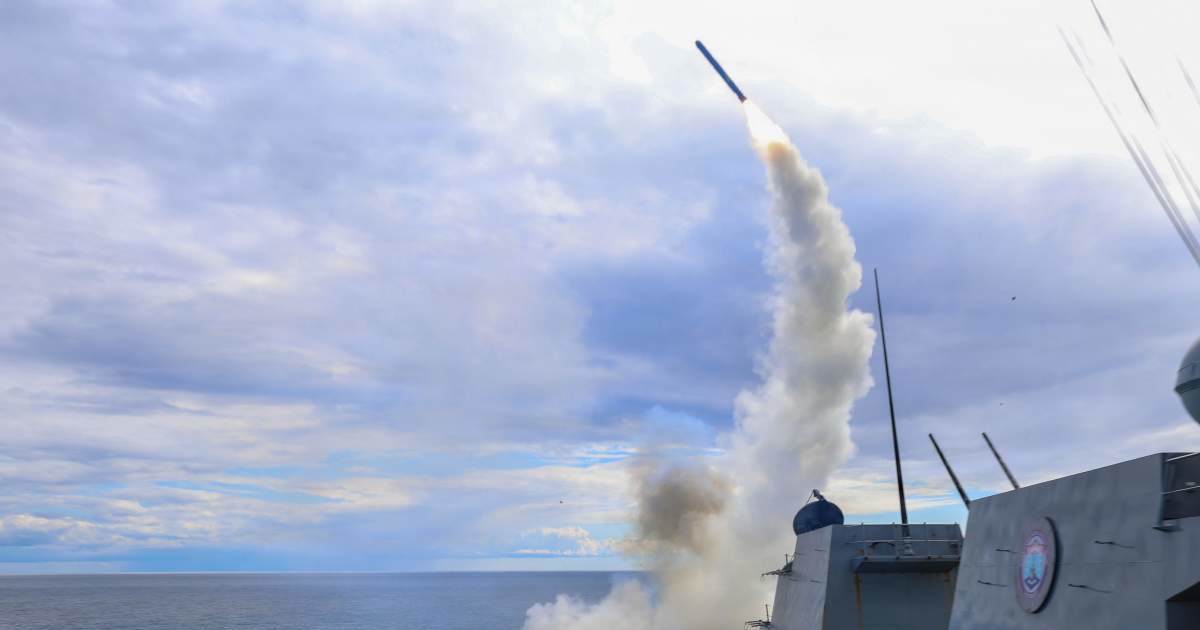
The ongoing conflict with Iran has sparked widespread concern over the heavy consumption of critical U.S. military stockpiles.
WASHINGTON, DC: Recent reports have raised alarms regarding the state of United States military reserves amid the ongoing Iran war. A viral assertion suggests that Washington has burned through 85% of its primary missile interceptors, warning that prolonged military engagement could severely strain the nation’s air defense capabilities.
Claim: US has used 85% of its key missile interceptors in Iran war
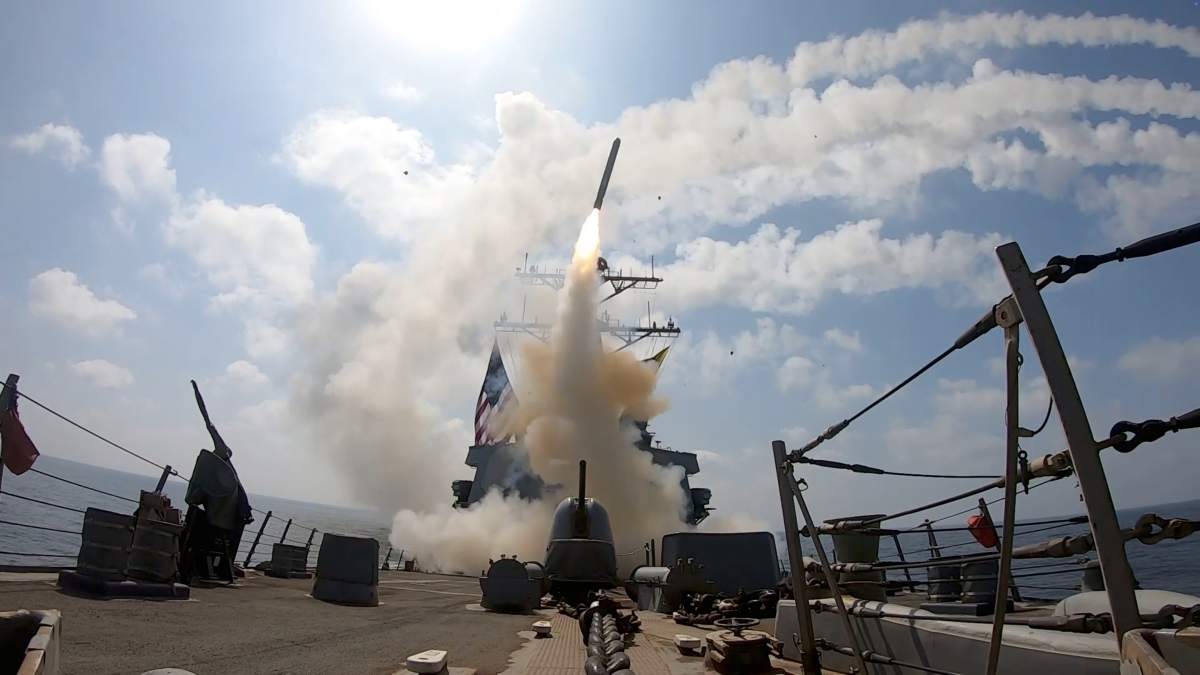
According to these reports, the high expenditure of critical munitions could hinder America’s strategic readiness for potential conflicts with other major powers like China or North Korea if the current intensity of fighting persists.
Mark Cancian, a retired Marine Corps colonel and defense analyst at the Center for Strategic and International Studies (CSIS), noted, “If the war continues at the rate it’s been going for the last [five] days … it would reduce stockpiles enough that there would be a new, higher level of risk … with the Indo-Pacific.”
During the initial stages of the campaign—designated as Operation Epic Fury—the US military reportedly expended thousands of precision-guided munitions for long-range offensive strikes and defensive maneuvers against incoming drones and missiles.
Michael O’Hanlon, director of foreign policy research at the Brookings Institution, acknowledged that weapon inventories are undeniably “lower than we would prefer.”
Fact Check: The claim is misleading
While the heavy usage of munitions is real, the specific statistic claiming that 80% to 85% of key missile interceptors have been depleted lacks independent verification. Defense Secretary Pete Hegseth firmly dismissed the reports, labeling coverage on the matter as “fake news.”
Furthermore, a CSIS analysis indicates that certain inventories, such as the Joint Air-to-Surface Standoff Missile (JASSM) and the Precision Strike Missile (PrSM), are projected to replenish relatively quickly, potentially bouncing back to pre-conflict levels by mid-to-late 2027.
Chief Pentagon spokesperson Sean Parnell maintained that the armed forces remain fully equipped and combat-ready. “America’s military is the most powerful in the world and has everything it needs to execute at the time and place of the President’s choosing,” he stated.
Parnell further emphasized, “We have executed multiple successful operations across combatant commands while ensuring the U.S. military possesses a deep arsenal of capabilities to protect our people and our interests.”
Echoing this sentiment, Brookings analyst Michael O’Hanlon expressed confidence that the U.S. has not yet lost its capability to deter adversaries like China or North Korea. However, he cautioned that if interceptor reserves continue to dwindle unchecked, that deterrence factor could erode over time—though pinpointing the exact threshold remains difficult as it relies on how foreign rivals perceive American military strength.