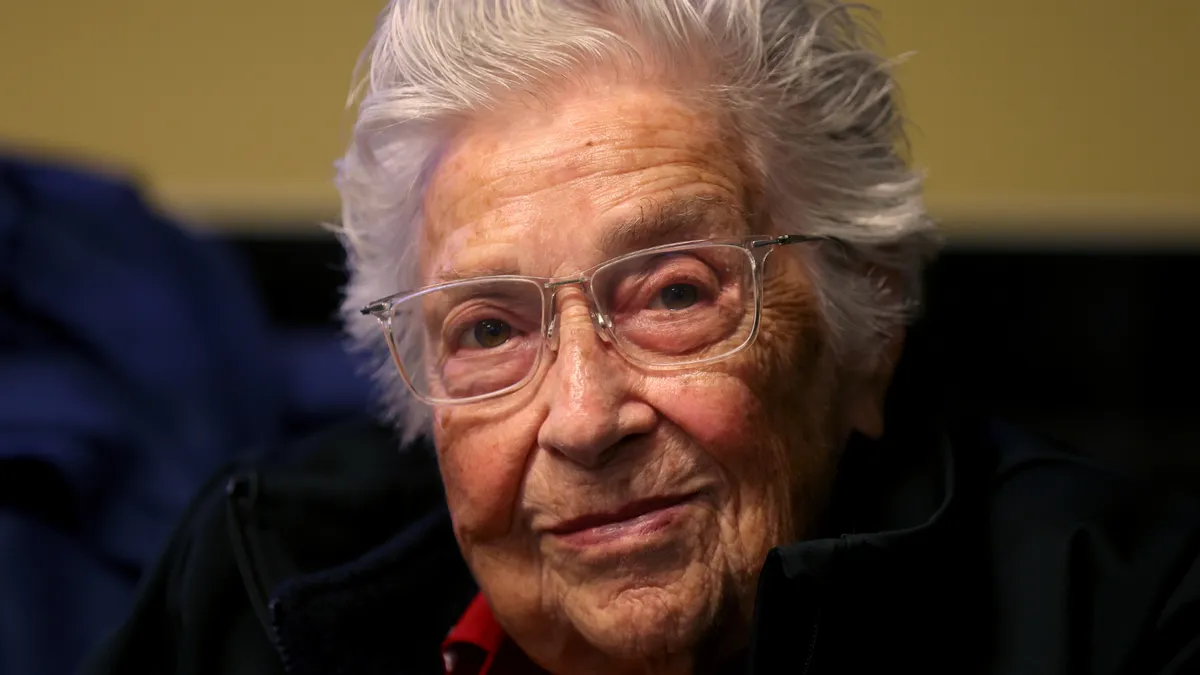
Claim: In July 2026, Jeanne Gibson, widely recognized as Rosie the Riveter, passed away at the age of 100.
Rating: Mixture (Contains both true and false elements)
- What’s True: Gibson was indeed a “Rosie”—part of the millions of women who stepped into the workforce during World War II to bolster the domestic war effort. Until her passing in July 2026, she remained a dedicated and passionate advocate for the legacy of the World War II generation of women workers.
- What’s False: Gibson was not the actual model or historical inspiration behind Norman Rockwell’s iconic 1943 “Rosie the Riveter” painting, nor was she the basis for the famous wartime motivational poster commonly associated with the character.
Background and Rumors
In late July 2026, various social media platforms—including Reddit, Instagram, Facebook, and LinkedIn—saw a surge of posts reporting the death of Jeanne Gibson at age 100 on July 29, 2026. Many of these tributes explicitly labeled her as “the inspiration for Rosie the Riveter,” while others more accurately referred to her as “a Rosie the Riveter.” The influx of online memorials prompted many readers to search for verification regarding her connection to the iconic cultural symbol.
Official Announcements and Life History
Public tributes confirming her death were published on Facebook by organizations such as Pacific Historic Parks (the USS Arizona Memorial) and the Rosie the Riveter WWII Home Front National Historical Park. Pacific Historic Parks noted that Gibson had regularly participated in events honoring women who served on the home front.
According to these historical tributes, Gibson moved to Seattle in 1944 at the age of 18 to work as a welder on destroyers for Todd Pacific Shipyards. Later in the conflict, she relocated to Juneau, Alaska, to support the Army Transportation Corps by processing critical logistics documents that maintained supplies for Allied forces throughout the Pacific Theater.
The True Identity of “Rosie the Riveter”
Historically, the moniker “Rosie the Riveter” serves as a collective title representing all women who took on vital industrial and labor roles during World War II, particularly factory positions traditionally held exclusively by men. Preservation groups, such as the Rosie the Riveter Trust and the American Rosie the Riveter Association, honor every woman who contributed in this capacity.
However, neither organization attributes the famous imagery of the character to Gibson:
- The “We Can Do It!” Poster: The Rosie the Riveter Trust notes that historians remain uncertain of the identity of the original model for the Westinghouse Electric motivational poster featuring a woman flexing beneath the slogan “We Can Do It!” This poster did not achieve its widespread cultural status until the 1980s.
- Norman Rockwell’s Painting: According to the American Rosie the Riveter Association, the direct inspiration for Norman Rockwell’s famous 1943 Saturday Evening Post cover—which depicted a muscular woman in overalls, holding a riveting tool, and stepping on a copy of Adolf Hitler’s Mein Kampf—was Mary Doyle Keefe.
AI-Generated Imagery
Following news of Gibson’s passing, several social media tributes featured an image purporting to show Gibson posing in the style of the Westinghouse “We Can Do It!” poster. Analysis of the image revealed it was generated using artificial intelligence, as evidenced by graphical errors involving the American flag in the background (such as misplaced and missing stars), though it appeared to be modeled after an authentic photograph of Gibson.