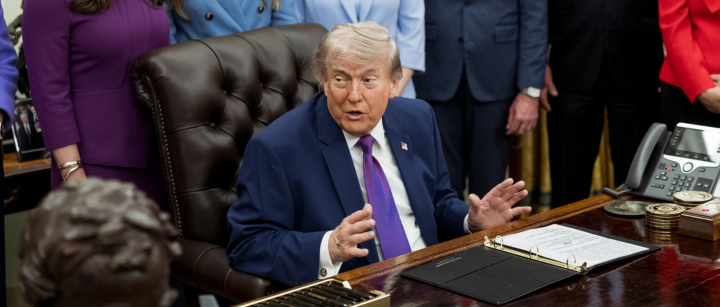
President Donald Trump’s assertion that the federal Right to Try law, enacted in 2018, has saved “thousands of lives” lacks supporting evidence. Despite the law offering a pathway for terminally ill patients to access unapproved drugs outside of clinical trials, experts in the field suggest the President’s claims are greatly exaggerated.
Research indicates that the law has seen limited use. Holly Fernandez Lynch, an associate professor of medical ethics at the University of Pennsylvania, noted in an interview that while “a handful of reported cases” exist, the number of patients receiving therapy or having their lives saved through these products is “certainly not thousands.” Similarly, Alison Bateman-House, co-chair of NYU Grossman School of Medicine’s Working Group on Compassionate Use & Preapproval Access, described the President’s claim as a “gross misestimate.”
Dr. Jeffrey A. Singer, a senior fellow at the libertarian Cato Institute who initially supported the law, now contends it has “failed.” In a recent opinion piece for Reason magazine, he argued that the promise of accessing potentially life-saving drugs often remains “more on paper than in practice.”
Official reports from the Food and Drug Administration (FDA) show a modest number of uses under the Right to Try law. Between May 30, 2018, and December 31, 2024, 21 investigational drugs were reported as used. The FDA is required to report the number of drugs utilized but not the number of patients treated. The White House did not provide specific numbers or evidence to support the President’s claims when asked.
The President has repeatedly stated that Right to Try has saved “thousands of lives” throughout his political campaigns and in various public addresses. In response to inquiries, a White House spokesperson stated that Right to Try was a “historic victory” that allowed many Americans access to treatments previously hindered by regulatory processes.
The Goldwater Institute, which advocated for state-level Right to Try laws prior to the federal legislation, highlights examples of patient usage on its website. However, the institute also acknowledges that it cannot track the utilization of the federal law due to patient privacy regulations.
The federal Right to Try law has been a subject of controversy, particularly because it bypasses FDA oversight for accessing unapproved drugs outside of clinical trials. Under this law, patients diagnosed with a terminal illness, who have exhausted other options and cannot join a trial, can potentially access these drugs.
Critics argue that Right to Try is superfluous and potentially risky, given that the FDA has long operated an expanded access program. This program, often referred to as “compassionate use,” allows patients to obtain unapproved drugs for treatment purposes. Peter Lurie, a former FDA official, previously stated that the expanded access program had provided unapproved drugs to thousands of seriously ill patients while safeguarding them from unnecessary risks and exploitation.
Data from the FDA indicates that the vast majority of single-patient expanded access Investigational New Drug (IND) requests are approved, with approval rates often exceeding 99%. Experts in FDA law and policy suggest that these figures indicate Right to Try has not significantly altered the landscape of patient access. Patricia Zettler, a law professor at Ohio State University, commented that given the high approval rate of expanded access requests, there is “no logical reason to think Right to Try would change the landscape dramatically.”
Under both Right to Try and the expanded access program, pharmaceutical companies are not mandated to provide access to their unapproved drugs. Experts suggest that these companies, rather than the FDA, present the primary barrier to patient access. “Companies are more likely to say no than the FDA, by far,” Lurie stated, refuting the notion that the FDA is the main obstacle.
Large biopharmaceutical companies often have reservations about the Right to Try law. Alison Bateman-House noted that major companies are hesitant to use it, as it offers little incentive to avoid FDA involvement when distributing unapproved products. Pharmaceutical companies may prefer FDA oversight because the agency can leverage proprietary information from clinical trials and expanded access treatments to refine proposed treatment plans, thereby enhancing patient safety and aiding drug development. Companies like Pfizer and Johnson & Johnson have publicly supported FDA oversight when providing investigational drugs outside of clinical trials. Johnson & Johnson even established a bioethics panel to develop a policy on the use of investigational drugs, emphasizing the need for FDA oversight to ensure full consideration of available safety data.
Physicians also express reluctance regarding Right to Try, partly due to the lack of regulatory and ethical oversight. A survey of community oncologists revealed that a significantly higher percentage attempted to use the FDA’s expanded access program compared to Right to Try. The American Society of Clinical Oncology has also voiced opposition to Right to Try, supporting access to investigational drugs only when adequate patient protections are in place, which they believe Right to Try legislation lacks without improving patient access.
Despite disagreements, both proponents and critics of Right to Try acknowledge that the movement has increased public awareness of the FDA’s expanded access program. Bateman-House suggested that the law might have raised awareness of the possibility of using unapproved drugs outside of clinical trials, but that access was already available through existing channels. Dr. Singer echoed this sentiment, believing that Right to Try has had an indirect benefit by prompting the FDA to streamline its expanded access application process.
While there is evidence of an increase in expanded access requests and approvals, potentially influenced by the Right to Try law’s indirect impact, there is no substantiation for President Trump’s claim that it has “saved thousands of lives.”
Reference