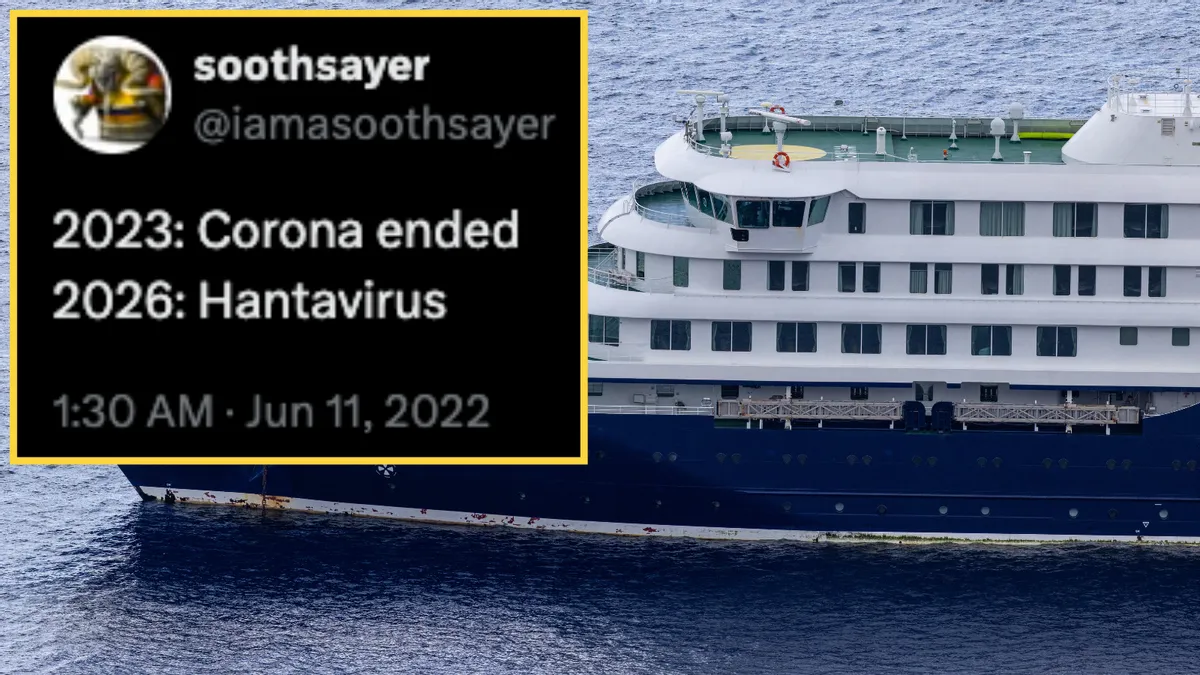
A years-old tweet mentioning “2026: Hantavirus” has gone massively viral after a real hantavirus outbreak aboard a cruise ship triggered international headlines in May 2026.
The post, originally published in 2022 by the X account @iamasoothsayer, resurfaced online as users claimed it appeared to “predict” the current hantavirus outbreak years in advance.
The tweet itself is real.
However, fact-checkers and health experts say there is no evidence the post represented an actual prediction or insider knowledge about a future outbreak.
What the Viral Tweet Said
The now-viral tweet reportedly read:
“2023: Corona ended
2026: Hantavirus”
The post was originally published in June 2022 by the X account:
@iamasoothsayer
According to Lead Stories, the timestamp is authentic and there is no evidence the post was digitally altered. X posts cannot simply have their timestamps manually changed after publication.
As the 2026 hantavirus outbreak began making headlines, users rediscovered the tweet and shared it millions of times across:
- X/Twitter
- TikTok
- Threads
Many users described the account as:
- “prophetic”
- “a time traveler”
- “a government insider”
- “proof pandemics are planned”
Why the Tweet Went Viral in 2026
The post exploded online because it resurfaced during a real hantavirus health scare involving the cruise ship MV Hondius.
According to the World Health Organization:
- multiple hantavirus cases were linked to the ship
- several passengers died
- the vessel carried travelers from more than 20 countries
WHO emphasized the overall global public health risk remained low, but the outbreak generated widespread media coverage and online panic.
That timing made the old tweet appear unusually eerie to many social media users.
Does the Tweet Actually Predict the Outbreak?
There is no evidence the account had advance knowledge of the outbreak.
Experts say the situation is more likely an example of:
- coincidence
- vague prediction posting
- selective viral amplification
The account behind the tweet reportedly contained very few posts and described itself as belonging to an:
“astrologist” who “reads the future.”
Researchers and journalists noted that social media accounts frequently publish broad predictions about:
- wars
- pandemics
- celebrity deaths
- disasters
- economic collapses
If one prediction later resembles a real event, it can suddenly go viral while failed predictions disappear or are ignored.
A Spanish analysis describing the phenomenon called it a common internet tactic:
posting numerous vague predictions and later deleting incorrect ones once a coincidence appears successful.
Hantavirus Is Not a New Disease
Another reason experts caution against conspiracy theories is because hantavirus has existed for decades.
Hantaviruses were first identified long before COVID-19 and are primarily spread through exposure to infected rodents or rodent waste.
Health authorities note:
- hantavirus outbreaks are rare
- the disease is already medically documented
- scientists have monitored hantavirus for decades
That means mentioning “hantavirus” in a 2022 tweet did not require predicting the existence of an unknown future virus.
Why Social Media “Predictions” Feel Convincing
Researchers studying misinformation say humans naturally search for patterns during uncertain events.
When crises happen, people often become more likely to believe:
- prophecy claims
- conspiracy theories
- coincidence narratives
- “hidden knowledge” stories
The COVID-19 pandemic intensified this tendency globally.
Experts say vague online predictions become especially persuasive when:
- public anxiety is high
- events feel chaotic
- timing appears unusually specific
- social media repeatedly amplifies the coincidence
Real Outbreaks Often Trigger Conspiracy Theories
The hantavirus outbreak aboard the MV Hondius quickly fueled:
- pandemic rumors
- bioweapon theories
- vaccine conspiracies
- “planned outbreak” claims
Health agencies and fact-checkers repeatedly warned against misinformation surrounding the outbreak.
WHO currently assesses the broader global risk from the cruise ship cluster as low.
Medical experts also emphasized hantavirus is fundamentally different from COVID-19 and is not spreading globally like a new pandemic.
AI and Internet Culture Amplify Viral Fear
The viral tweet also reflects how internet culture increasingly rewards:
- eerie coincidences
- “predictions”
- conspiracy aesthetics
- doomposting
- mystery accounts
Many users shared the post primarily because it felt uncanny rather than because they literally believed the account predicted the future.
Still, fact-checkers warned that such viral posts can unintentionally fuel misinformation and public panic during real health events.
What Fact-Checkers Confirmed
Snopes and Lead Stories both confirmed:
- the tweet itself is authentic
- it was genuinely posted in 2022
- there is no evidence of timestamp manipulation
However, fact-checkers also stressed there is no evidence the account possessed foreknowledge of the 2026 outbreak.
The viral interpretation claiming the tweet “proved” a planned pandemic or secret conspiracy is unsupported.
Bottom Line
Yes, a real tweet posted in 2022 mentioned “2026: Hantavirus,” and the post resurfaced during the 2026 cruise ship outbreak.
But experts say the viral “prediction” rumor does not prove insider knowledge, conspiracy theories, or planned outbreaks.
The tweet appears to be an example of an old vague prediction gaining attention after coincidentally resembling real-world events years later.
Sources
https://www.snopes.com/fact-check/hantavirus-tweet-2022-prediction