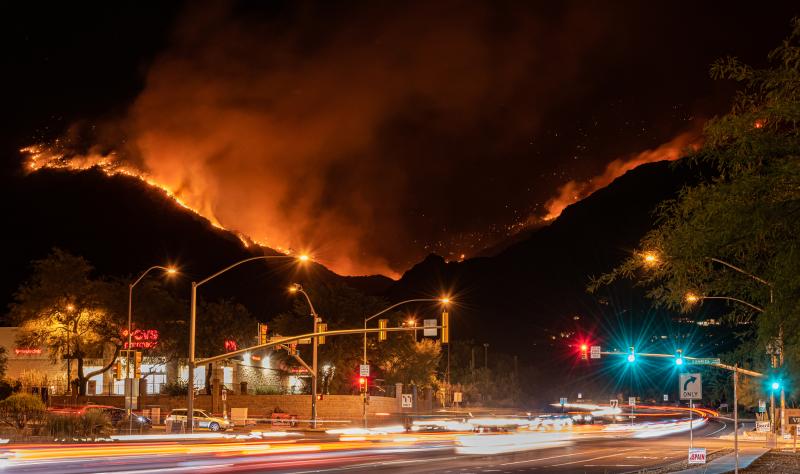
The Eaton wildfire, ignited by 90-mile-per-hour winds in Los Angeles County on January 7, 2025, raged until January 31. This devastating blaze resulted in 19 fatalities and necessitated the evacuation of approximately 100,000 individuals, as detailed in a recent study published in the Morbidity and Mortality Weekly Report.
A significant number of those displaced required shelter, including roughly 1,800 residents from assisted living and skilled nursing facilities. By January 13, concerns arose regarding gastrointestinal illnesses, COVID-19, and influenza circulating among individuals at the Eaton wildfire evacuation shelter, prompting notification of the Pasadena Public Health Department (PPHD). In response, public health officials recommended enhanced monitoring, strengthened infection prevention and control (IPC) measures, and the establishment of dedicated isolation areas to mitigate potential outbreaks.
The study’s authors, led by the PPHD, emphasized that infectious disease outbreaks in shelters pose a critical public health challenge, intensifying the difficulties faced by individuals seeking safety during and after emergencies. They advocated for the rapid and consistent application of standardized IPC protocols as an integral component of shelter establishment procedures, noting that early implementation of these measures can significantly reduce transmission, illness, and mortality, thereby decreasing the likelihood of outbreaks.
Co-infections Observed in 11 Residents
Following reports of illness, public health staff promptly assessed the shelter to identify areas for improvement in IPC practices. Observations revealed issues such as inadequate handwashing techniques and improper use of personal protective equipment. Furthermore, several cleaning products lacked efficacy against norovirus, and the shelter was without a dedicated isolation space.
The shelter implemented the suggested changes, with regular visits from both Pasadena and California public health personnel to ensure the proper execution of IPC measures. In addition to these improvements, the PPHD and the California Department of Public Health actively monitored ill shelter residents receiving care from medical staff, as well as staff members who underwent testing or reported illness to their supervisors.
Public health officials documented a total of 104 norovirus cases, 56 COVID-19 cases, 29 influenza cases, and 30 instances of "nonspecific respiratory illness" among both evacuees and staff. Among the affected residents, 11 presented with co-infections: four with norovirus and COVID-19, five with norovirus and influenza, and two with COVID-19 and influenza.
Difficulties in Implementing Infection Control
The authors acknowledged that the actual number of illnesses may be higher, as individuals with milder symptoms might not have sought medical attention, or employees may not have reported their conditions. The decline in reported illnesses could also be attributed to a reduction in the shelter’s population.
Despite these challenges, the study strongly emphasizes the critical importance of infection control and prevention in communal shelters following climate-related disasters. The authors highlighted that implementing outbreak control measures can be difficult in the aftermath of disasters when many individuals with limited housing alternatives and diverse medical needs require immediate shelter. This situation is further complicated when multiple communicable diseases are circulating within a community, each necessitating a distinct preventive approach.