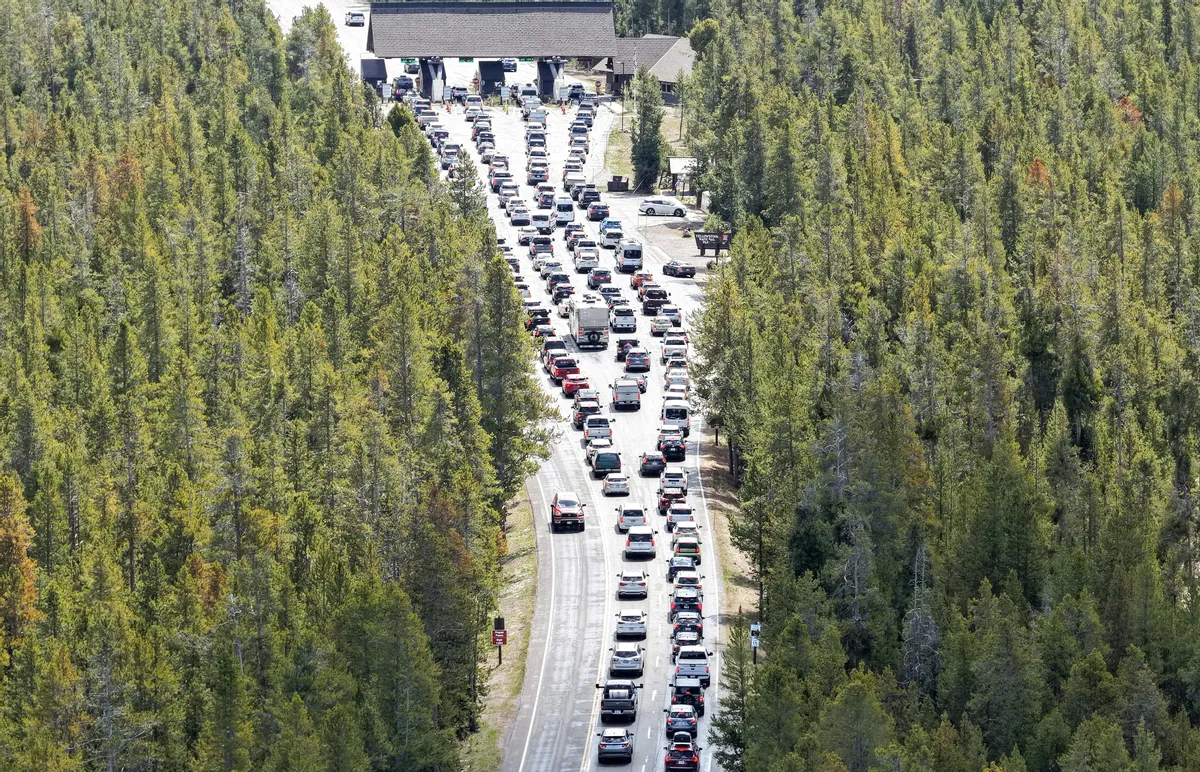
A proposal to designate U.S. Highway 287 as the future Interstate 47, nicknamed the "Trump Highway," has circulated, leading to claims that the Trump administration planned to build an interstate through Grand Teton and Yellowstone National Parks.
The claim is mostly false, with some elements of truth. U.S. Senators John Cornyn and Cynthia Lummis did introduce legislation to upgrade the entire length of U.S. Highway 287 to interstate standards, and this highway does pass through Grand Teton National Park in Wyoming. The bill proposed naming the route "I–47 Future Interstate Act of 2026," with the nickname "Trump Interstate" suggested by Senator Cornyn as a nod to President Trump being the 47th president.
However, several key points contradict the notion of an actively constructed highway through the parks:
- Legislative Status: The bill introduced by Senators Cornyn and Lummis has not been voted on and is not law.
- Funding: The proposed legislation does not allocate any funds for upgrading U.S. Highway 287 to interstate standards, and no active construction is underway for such an upgrade.
- Yellowstone Connection: U.S. Highway 287 does not run through Yellowstone National Park. Its existing segments terminate at the park’s borders.
- Administration Support: There has been no public statement from the Trump administration indicating support for this proposed legislation.
The concept of an interstate highway system originated from President Dwight D. Eisenhower, who was inspired by Germany’s autobahn and championed the National Interstate and Defense Highways Act of 1956. This act laid the groundwork for the modern interstate system, characterized by specific design standards ensuring high-speed, limited-access travel.
U.S. Highway 287, while a significant route, does not consistently meet these interstate standards. Many sections, particularly in mountainous terrain, resemble rural, two-lane roads. For U.S. 287 to become an interstate, substantial upgrades would be required, a prospect that faces significant logistical and financial hurdles, as indicated by a 2024 feasibility study by the Texas Department of Transportation which estimated a $24.5 billion cost for upgrades within Texas alone. Furthermore, the necessity and support for such upgrades vary significantly by state.
The idea of building an interstate directly through national parks is generally considered antithetical to their purpose of preserving natural landscapes and providing recreational opportunities. Historically, national parks have largely avoided containing major interstate highways. The significant environmental and recreational value of areas like Grand Teton and Yellowstone makes the prospect of an interstate running through them highly improbable.