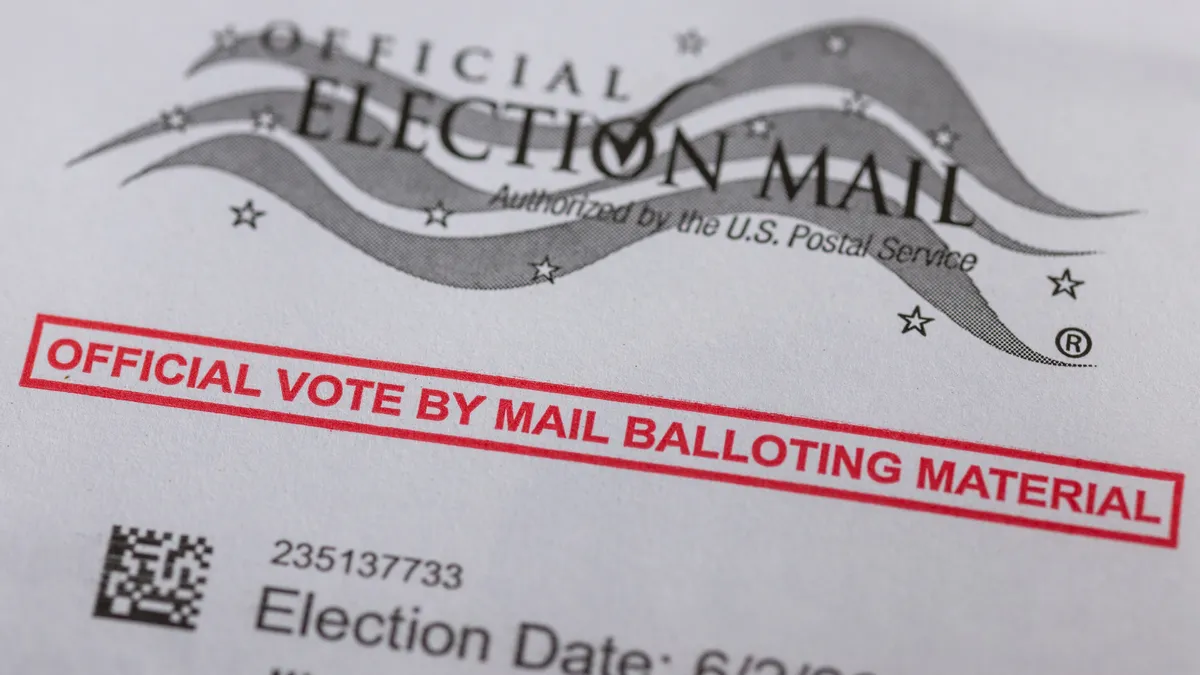
In June 2026, the U.S. Postal Service (USPS) put forth a proposed rule that would halt the delivery of mail ballots to states that do not provide the federal government with voter lists.
This claim is true.
The USPS has indeed proposed a rule that would require states to furnish the federal government with lists of mail-in and absentee voters. In return, the USPS would deliver mail ballots to voters within those states. As of the current date, this proposal has not been finalized and is subject to legal challenges that could alter, delay, or completely prevent its implementation.
Some reports have suggested that a judge has mandated that "ALL 50 states MUST send in their voter rolls to confirm citizenship." However, this assertion is based on a single court decision that temporarily allowed an injunction to be stayed, meaning it’s a temporary go-ahead while a lawsuit is being decided. This interpretation overlooks other ongoing legal actions that are currently preventing the USPS from proceeding with the rule.
The proposed rule stems from an executive order issued on March 31, 2026. While the rule aligns with the order’s directive, there are some differences in the specifics, which has contributed to confusion.
It’s crucial to note that this rule remains a proposal and has not yet been made active. Furthermore, both the executive order and the proposed rule are facing numerous legal challenges. As of July 23, 2026, a judge has temporarily blocked the implementation of the order and the proposed rule in approximately two dozen states that have filed lawsuits. Legal battles concerning the rule’s implementation in other areas are still ongoing and their outcomes are uncertain.
The USPS officially proposed this rule change on June 2, 2026. Proposed rules are open for public comment for a period of 30 days before they can be reviewed and potentially finalized. Even after finalization, rules can still be challenged in court.
The proposed rule includes provisions to standardize mail ballot envelopes with official election mail logos, barcodes, and automation compatibility. It would also establish a "Mail-In and Absentee Participation List." Under this proposal, states would be required to supply the USPS with a list of individuals receiving mail ballots, along with a unique barcode for each. States would retain control over who is eligible to vote by mail, managing enrollment through a "Federal Ballot Mail Portal." The USPS would not be responsible for verifying individual eligibility but would implement a verification procedure to ensure state-submitted lists comply with the proposed standards.
The March 31, 2026, executive order from President Trump directed the USPS to propose this rule. However, the wording of the order differed in some aspects, specifically regarding the direction of list provision. The executive order instructed the USPS to "provide each State with a list of individuals (Mail-In and Absentee Participation List) who are enrolled with the USPS," whereas the proposed rule mandates states to provide lists to the USPS. The executive order also called for the Department of Homeland Security to create a "State Citizenship List" and for the Secretary of Homeland Security and the Postmaster General to coordinate on implementation. The proposed rule does not explicitly mention coordination with other federal agencies, though it does note that law enforcement could use USPS data for potential investigations.
The finalization and implementation of this rule are currently in limbo due to ongoing legal challenges. On June 3, the NAACP and other civil rights organizations filed a motion to enforce a settlement agreement, arguing the proposed rule would violate the USPS’ commitment to timely election mail delivery. While an initial injunction was granted, an appeals court later overturned this decision, allowing the USPS to proceed. This appeals court decision is the basis for some claims that all 50 states must comply.
However, in a separate lawsuit, a judge in Massachusetts has indicated that organizations, led by the League of Women Voters, could seek an injunction if the D.C. Circuit’s decision is reversed. These groups have indeed filed such a request. As of July 23, no decision has been made on this request.
Additionally, 23 state attorneys general and one governor filed a lawsuit in April challenging the executive order on constitutional grounds, arguing it infringes on states’ authority over elections. On June 25, a Massachusetts judge granted a request for an injunction to block aspects of the executive order and the USPS rule while this lawsuit is ongoing, meaning the USPS would still be obligated to deliver mail ballots in the states that sued, even without an absentee voter list.