The Claim
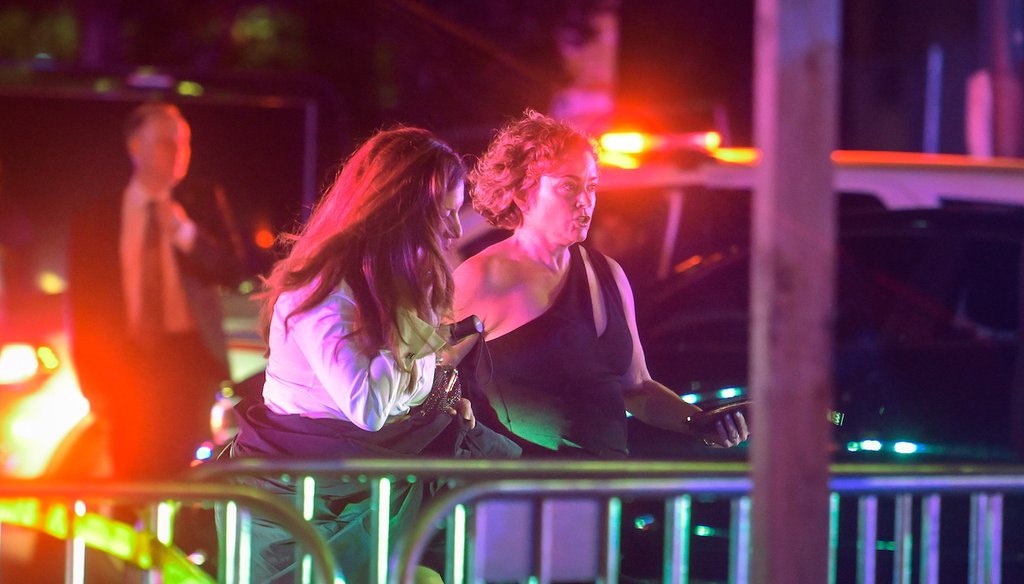
Following the April 25, 2026 shooting incident near the White House Correspondents’ Dinner, viral social media posts claimed to show:
“Unedited raw security footage” of the suspect entering the venue.
The video spread widely across platforms like Facebook and X, often presented as authentic surveillance footage capturing the moment of the attack.
What Actually Happened
There is real surveillance footage from the incident.
Authorities confirmed that suspect Cole Tomas Allen:
- Ran through a security checkpoint at the Washington Hilton
- Was pursued by Secret Service agents
- Was arrested before reaching the main event area
Credible reports confirm that official footage exists, though it is limited and subject to ongoing investigation.
Investigation: Is the Viral Video “Unedited”?
The viral claim is false.
1. The Video Was Altered Using AI
Fact-checkers found that the widely shared clip:
- Was not raw footage
- Had been enhanced and modified using artificial intelligence
The edited version originated after a low-quality video was shared online. Users then applied AI tools to “enhance” it—introducing visual distortions.
👉 The creator of the enhanced clip even acknowledged that AI:
“made up some things to fill in the gaps.”
2. Clear Visual Errors in the Footage
Analysis of the viral video reveals multiple inconsistencies not present in the original footage:
- Objects and people morphing shape mid-frame
- Inconsistent uniforms and markings
- Visual artifacts appearing and disappearing
- Distorted body outlines and unnatural movements
These are classic signs of AI-generated interpolation errors, not authentic surveillance recording.
3. The Original Footage Was Lower Quality
The confusion began when:
- Donald Trump shared low-resolution footage from the incident
- Online users attempted to “enhance” it
- The altered version was reposted without context, falsely labeled as “raw”
In reality:
- The viral clip is derived from real footage
- But it is not original or unedited
Why the Claim Spread
This misinformation follows a familiar digital pattern:
- Real event ✔️
- Real footage ✔️
- AI-enhanced manipulation ❌
- Missing context ❌
Once reposted without explanation, the altered video was mistaken for authentic evidence.
This case also highlights a broader issue:
➡️ AI tools can increase perceived clarity while decreasing accuracy
Final Verdict: False ❌
The claim that the viral video shows “unedited raw security footage” is:
False
- The footage was modified using AI tools
- It contains visual inaccuracies not present in the original
- It was shared without proper context, leading to misinformation
Conclusion
While real surveillance footage of the WHCD incident exists, the viral video circulating online is not authentic raw footage.
It is an AI-altered version that introduces misleading visual details.
As AI tools become more accessible, distinguishing between:
- Original evidence
- and digitally altered content
is becoming increasingly critical—especially during breaking news events.