Viral Video of Prisoner Grabbing Tray From Female Guard Is Fake
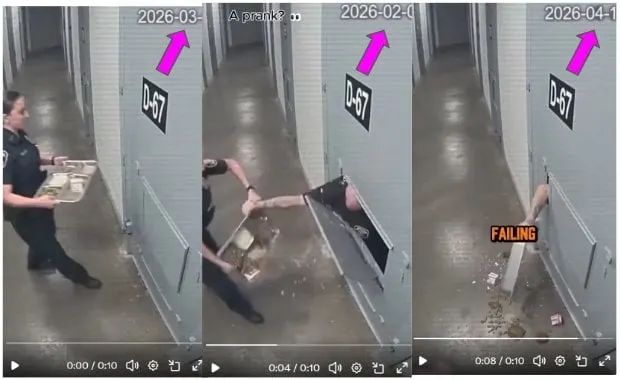
A viral video circulating online claims to show a prisoner aggressively grabbing a food tray from a female prison guard during what appears to be a confrontation inside a correctional facility.
The clip spread rapidly across social media platforms, where many users described it as proof of growing disorder and danger inside prisons.
But according to fact-checkers, the video is not authentic.
Investigators found the footage was either staged or digitally manipulated and does not depict a real prison incident. (yahoo.com)
What the Viral Video Claimed to Show
The clip appears to show:
- a female correctional officer carrying trays
- a prisoner suddenly grabbing one
- a chaotic confrontation inside a prison setting
- bystanders reacting in the background
Because the footage looked similar to cellphone surveillance clips often shared online, many viewers assumed it was genuine prison footage leaked from a correctional facility.
The video gained traction especially on:
- X/Twitter
- TikTok
- prison-themed content pages
Some posts falsely claimed the clip showed a recent real incident involving violence against prison staff.
Why Fact-Checkers Say the Video Is Fake
According to fact-check reports, investigators found no evidence the incident actually occurred inside a real prison facility. (yahoo.com)
Researchers identified several red flags, including:
- lack of verifiable location information
- no official reports matching the incident
- absence of credible news coverage
- unusual behavior patterns suggesting staged acting
- visual inconsistencies associated with manipulated footage
Fact-checkers also noted that viral videos involving dramatic prison confrontations are frequently staged specifically to generate engagement online.
Why Fake Prison Videos Spread So Fast
Content involving prisons and violence performs extremely well on social media because it triggers strong emotional reactions.
Videos suggesting:
- attacks on guards
- inmate chaos
- prison violence
- authority breakdown
often receive massive engagement regardless of authenticity.
The emotional nature of prison footage encourages users to share clips quickly before verification occurs.
Researchers studying misinformation have repeatedly found that emotionally charged video spreads faster than corrections online. (arxiv.org)
Staged “Reality” Videos Are Increasing Online
The fake prison clip reflects a broader trend involving staged realism content designed to appear authentic.
Across platforms like TikTok, Facebook, and YouTube, creators increasingly produce:
- fake surveillance footage
- staged public fights
- scripted workplace incidents
- fabricated “caught on camera” moments
These videos are often intentionally filmed to imitate:
- CCTV footage
- bodycam recordings
- leaked security video
- authentic cellphone clips
In many cases, viewers encounter reposted versions stripped of the original context, making staged content appear real.
AI and Video Manipulation Are Blurring Reality
Modern editing tools and AI-assisted video generation are making fake clips increasingly difficult to identify.
Experts warn that synthetic or manipulated footage now spreads widely during:
- political debates
- crime discussions
- viral outrage cycles
- culture-war controversies
Even relatively simple edits can dramatically alter how viewers interpret a video.
That growing realism has made verification far more important before sharing emotionally provocative footage online.
Prison Staff Violence Is a Real Issue — But This Clip Isn’t
Correctional officers do face genuine workplace dangers inside many prison systems.
Real incidents involving:
- inmate assaults
- contraband violence
- overcrowding tensions
- understaffing
have been documented across correctional facilities in the United States.
However, fact-checkers emphasize that using fake or staged videos to discuss real issues ultimately spreads misinformation and undermines legitimate reporting.
Why People Believed the Video
The clip looked believable partly because:
- prison environments are visually generic
- many people are unfamiliar with correctional procedures
- shaky footage appears authentic
- social media captions added emotional context
Once the video was reposted with dramatic captions, viewers often assumed the incident had been verified.
But investigators found no official evidence linking the footage to a real correctional event.
Bottom Line
No, the viral video does not show a real prisoner grabbing a tray from a female prison guard during an authentic prison incident.
Fact-checkers found the clip was fake, staged, or digitally manipulated and not connected to any verified correctional facility event. (yahoo.com)
The video is another example of how emotionally charged staged footage can spread rapidly online when presented as real-world “caught on camera” content.
FAQ
Is the prison tray video real?
No. Fact-checkers concluded the footage was fake or staged. (yahoo.com)
Did the incident happen in a real prison?
Investigators found no evidence connecting the clip to an actual correctional facility incident.
Why do fake prison videos spread online?
Because emotionally intense “caught on camera” clips generate strong engagement and rapid sharing.
Are staged viral videos common now?
Yes. Social media increasingly features scripted or manipulated videos presented as authentic real-life incidents.
Sources
https://www.yahoo.com/news/articles/fact-check-fake-video-prisoner-041811855.html
https://arxiv.org/abs/2101.00009
https://www.vera.org/reimagining-prison-web-report/examining-prison-conditions