For decades, PolitiFact has been scrutinizing the accuracy of statements made by U.S. presidents. This examination extends across multiple administrations, from Barack Obama and Donald Trump to Joe Biden, and now Trump once again.
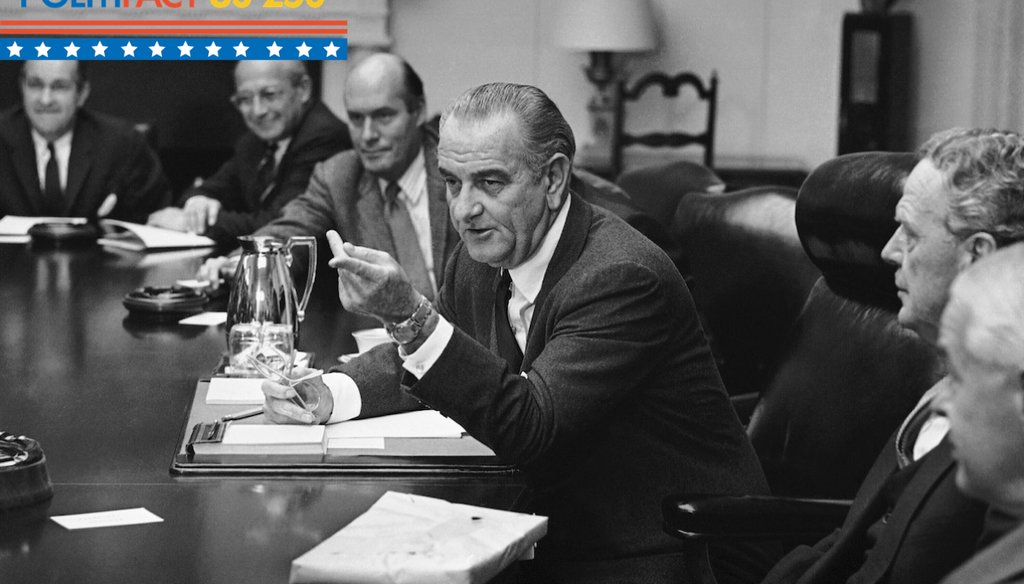
As the United States approaches its 250th anniversary, an in-depth look has been taken at how false or misleading statements from the nation’s highest office have impacted the course of history. This comprehensive review highlights significant rhetoric from a range of presidents, including Andrew Jackson, James K. Polk, William McKinley, Harry Truman, Dwight Eisenhower, Lyndon Johnson, Richard Nixon, Ronald Reagan, Bill Clinton, George W. Bush, and Donald Trump.
Compiling this list proved to be a more intricate process than initially anticipated. Engaging with political scientists and historians revealed diverse perspectives on how to evaluate a president’s veracity.
Key questions arose: Did a president fully grasp the facts when speaking, or were they misinformed? Was the statement outright false, or did it mislead through omission or by creating an inaccurate impression through silence? Are some inaccuracies more forgivable than others? And should presidents be held to a different standard than private citizens when they are less than truthful?
One perspective suggests that the core issue isn’t isolated lies from individual presidents, but rather the accumulated impact of all inaccuracies that Americans have become aware of. This accumulation, it’s argued, has eroded trust, making it harder for presidents to command belief from the public. Even seemingly minor deceptions can chip away at public confidence in the government, according to experts.
Further analysis revealed that not all instances of presidential deception carry the same weight. One expert categorizes presidential falsehoods on a spectrum from the trivial to the most damaging.
At the less severe end are what might be termed “justifiable lies,” such as instances where the White House obscured a national security crisis by offering a less critical reason for a presidential trip.
A step up are “minor lies,” which might include embellishing personal histories or recounting fictionalized war stories. Even repeated citations of misattributed quotes can fall into this category.
More serious are “lies to prevent embarrassment and preserve political viability,” such as concealing personal health issues or disabilities that could impact public perception.
Higher still are “lies to cover up important facts,” exemplified by broad reassurances about policy outcomes that did not hold true for a significant portion of the population, leading to widespread disillusionment. This particular instance was recognized as a “Lie of the Year.”
At the most severe end are “lies of policy deception.” These are considered the most damaging because they prevent citizens from accurately assessing the government’s actions and intentions. Examples include misleading justifications for military actions or the concealment of clandestine operations, as well as falsehoods related to significant political scandals. Many of these impactful instances are included in the historical review.
The question of whether presidential truthfulness has declined over time is complex, with public expectations regarding transparency and accuracy shifting. These expectations have been influenced by evolving media landscapes and societal norms. Early presidents, for instance, operated in an era where private matters were often considered off-limits for public discourse.
While historical figures like Thomas Jefferson navigated accusations with the understanding that personal lives were not typically subject to public scrutiny, many earlier presidents are considered to have been largely forthright with the public.
In more recent times, some presidents have made explicit commitments to honesty. A notable modern example is Jimmy Carter, who, upon launching his presidential campaign, pledged not to lie or mislead the American people. Research on his presidency has yielded little evidence of significant falsehoods.
The seriousness with which past administrations viewed accuracy is evident in how presidents who were found to have made false statements typically responded – often by attempting to reframe their words or argue technicalities.
However, some historians place Donald Trump in a distinct category, arguing that his approach fundamentally undermines the shared understanding of facts crucial for a functioning democracy. The assertion is that Trump’s falsehoods are not merely a matter of frequency but represent a different kind of deception, one that significantly corrodes political discourse.
Reference