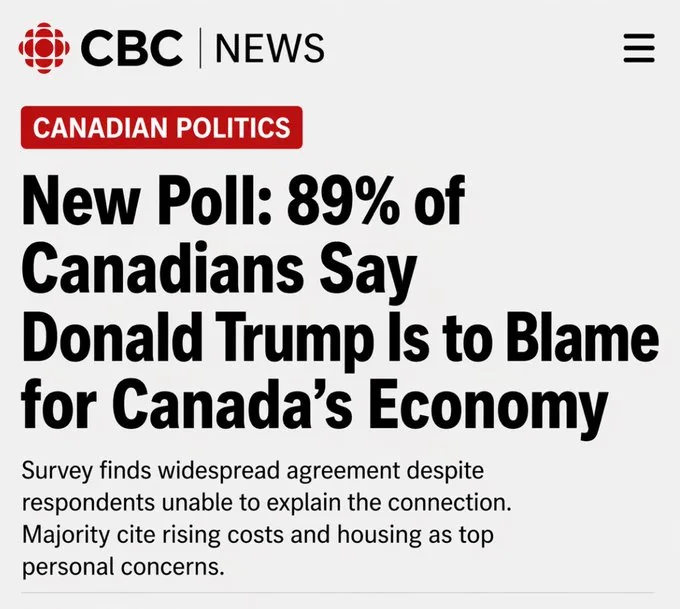
A viral image circulating across social media claims that CBC News published a poll showing “89% of Canadians say Donald Trump is to blame for Canada’s economy.”
The image spread rapidly online, particularly on Facebook and political discussion pages, where users debated whether Canadians were unfairly blaming U.S. President Donald Trump for domestic economic problems.
But the image is not authentic.
Fact-checkers found no evidence that CBC News ever published such a poll, and investigators determined the graphic appears to have originated from a satire or AI-generated content source.
What the Viral Image Claimed
The image used a layout designed to imitate CBC News branding and included a fabricated headline reading:
“89% of Canadians Say Donald Trump Is to Blame for Canada’s Economy”
Some versions also included additional text claiming respondents were “unable to explain the connection.”
Because the graphic resembled a legitimate news screenshot, many users assumed it came from CBC News or an authentic political survey.
The claim spread heavily across:
- X/Twitter
- political meme pages
- partisan discussion groups
However, no legitimate CBC article or broadcast matching the claim exists.
Did CBC Publish the Poll?
No.
Searches of CBC News archives and public reporting show no evidence the broadcaster ever conducted or published such a poll.
Fact-checkers investigating the image found:
- no corresponding CBC webpage
- no polling organization attached to the claim
- no official survey data
- no archived CBC segment matching the screenshot
The graphic itself also showed visual inconsistencies commonly associated with AI-generated or manipulated social media images.
Where the Fake Image Came From
According to fact-check reports, the image appears linked to satire-style or engagement-focused social media pages rather than legitimate journalism outlets.
The graphic was designed to imitate:
- CBC branding
- political news formatting
- television-style headlines
This tactic is increasingly common online because fake screenshots are easier to share than long articles and often generate emotional reactions before users verify authenticity.
Investigators noted the image lacked:
- author attribution
- poll methodology
- survey sample details
- publication date formatting used by CBC
- links to an original article
Those are major warning signs for fabricated political content.
Why the Claim Spread Quickly
The rumor spread rapidly because it tapped into several emotionally charged political narratives at once:
- Trump-related polarization
- Canadian economic anxiety
- anti-media sentiment
- partisan mockery
- U.S.-Canada political tensions
Even though the claim was fake, many users shared it because it aligned with their existing political views.
Researchers studying online misinformation have repeatedly found that emotionally provocative political claims spread faster than corrections on social platforms.
AI-Generated Political Graphics Are Increasing
The fake CBC poll image is part of a broader trend involving AI-assisted political misinformation.
Modern tools can now generate:
- fake news screenshots
- fabricated poll graphics
- synthetic headlines
- realistic broadcaster branding
- manipulated political imagery
Experts have warned that these visuals are becoming increasingly difficult for casual users to distinguish from authentic journalism.
During recent Canadian political cycles, researchers observed rising amounts of AI-generated political content spreading across social media platforms.
Why Fake Polls Are Effective Misinformation
Fake polls work especially well online because numbers create the illusion of authority.
When users see:
- percentages
- broadcaster logos
- poll language
- statistics
they often assume the information was professionally researched even when no actual survey exists.
That psychological effect makes fabricated polling graphics highly effective for:
- political propaganda
- engagement farming
- satire
- misinformation campaigns
In many cases, users share the images emotionally without checking whether the poll can actually be found on the publisher’s website.
The Bigger Problem: Trust in News Media
The fake CBC image also reflects growing confusion online about what constitutes authentic journalism.
As AI-generated content improves, users increasingly encounter:
- fake broadcaster screenshots
- synthetic news clips
- cloned voices
- fabricated headlines
That environment makes media literacy and source verification more important than ever.
Fact-checkers recommend verifying suspicious claims by:
- searching the original outlet directly
- checking official archives
- confirming polling organizations
- looking for multiple credible reports
If a major broadcaster really published a controversial poll, multiple reputable outlets would almost certainly reference it.
Bottom Line
No, CBC News did not publish a poll claiming that 89% of Canadians blame Donald Trump for Canada’s economy.
The viral image appears to be fake and likely originated from satire-style or AI-generated social media content rather than legitimate journalism.
There is no evidence CBC conducted or reported such a survey.
FAQ
Did CBC News publish the viral Trump economy poll?
No. Fact-checkers found no evidence CBC ever published the poll shown in the viral image.
Was the image AI-generated?
Investigators said the image showed signs of manipulation and likely originated from satire or AI-generated content sources.
Why do fake political polls spread online?
Because percentages and broadcaster branding make misinformation appear authoritative and emotionally persuasive.
Are AI-generated political graphics becoming more common?
Yes. Researchers have documented increasing amounts of AI-generated political content circulating during elections and political debates.