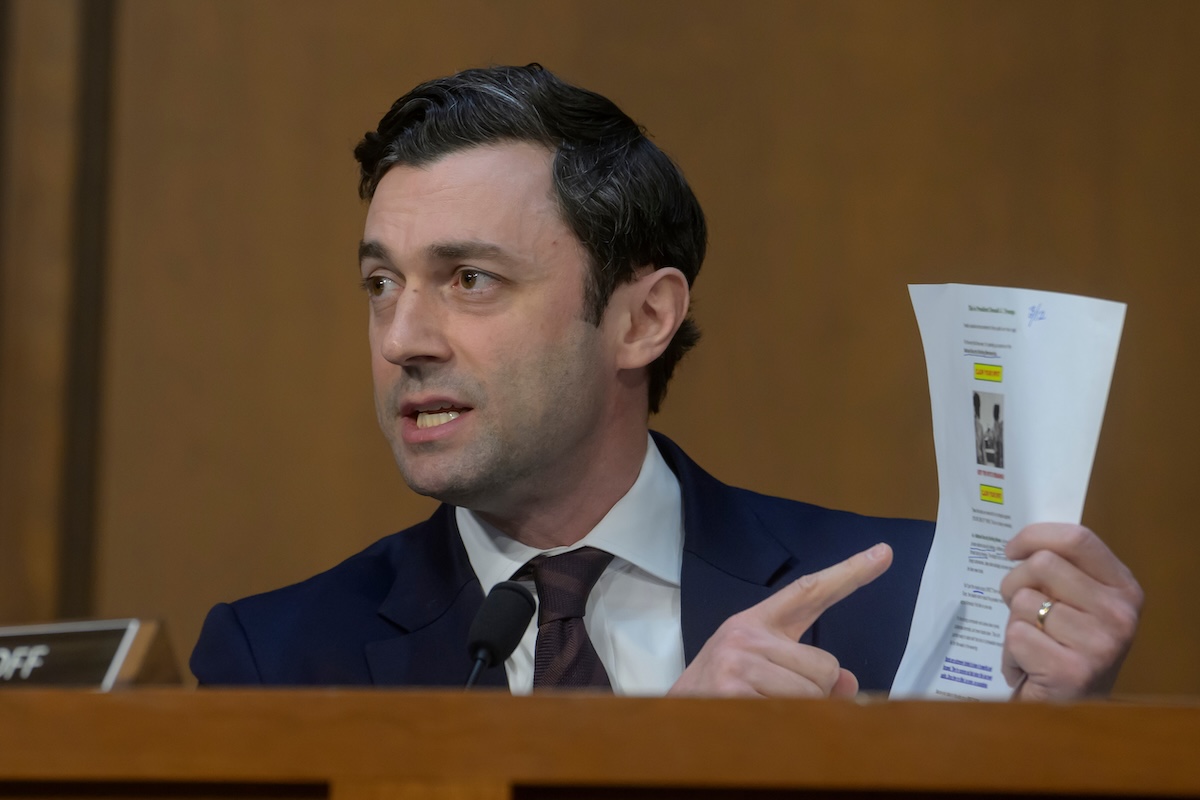
Democratic U.S. Sen. Jon Ossoff is highlighting Republican challenger U.S. Rep. Mike Collins’ healthcare policy positions, asserting they have negatively impacted Georgians. During a campaign rally in Savannah on June 27, Ossoff stated, “Donald Trump and his puppet Mike Collins, they doubled health insurance premiums for more than a million Georgians and threw 300,000 Georgians off their insurance altogether.”
His campaign clarified that Ossoff was referring to Republican-backed changes to the Affordable Care Act (ACA) that took effect in 2025. These changes involved the expiration of enhanced subsidies that had made ACA marketplace plans more affordable for many Americans. These subsidies, initially expanded during the pandemic by former President Joe Biden, were allowed to expire at the end of 2025, a move supported by Trump. Analysts had cautioned that this would lead to significant premium increases and a decline in marketplace enrollment.
These predictions have materialized nationwide, including in Georgia. Reports from The Current GA and the Georgia Recorder indicate that Georgia experienced a substantial drop in ACA marketplace enrollees, losing over a third of its participants between January and mid-April 2026. Additionally, a study by the consumer advocacy group Georgians for a Healthy Future revealed that Georgia’s net marketplace premiums have more than doubled, with an average increase of nearly 114% since 2025, exceeding Ossoff’s stated figure.
The extent of Collins’ and Trump’s direct involvement in these specific changes is a point of focus. While Collins’ campaign did not respond to a request for comment from PolitiFact, and the White House directed inquiries to Trump’s social media posts, no direct mentions of Ossoff concerning healthcare were found on Trump’s Truth Social.
Trump has a history of advocating for alternatives to the ACA, reducing marketplace plan promotion, and cutting subsidies. Despite attempts to repeal the law in 2017, the ACA has remained in place. Enhanced subsidies, introduced by the American Rescue Plan Act of 2021 and renewed through 2025, played a crucial role in keeping premiums low.
The “One Big Beautiful Bill Act,” associated with Trump, introduced significant changes to the ACA marketplace, requiring annual income and immigration status updates from policyholders instead of automatic reenrollment. This legislation did not extend the expiring subsidies that helped maintain lower premiums.
U.S. Rep. Mike Collins has consistently opposed the ACA. He voted in favor of the “One Big Beautiful Bill” in July 2025, proclaiming it ushered in an “golden age of America.” However, in October of the same year, protesters gathered at his district office, citing his stance on healthcare subsidies. Analysis from KFF at that time projected that Collins’ congressional district would face a 345% surge in benchmark plan premiums due to the expiring subsidies, the highest in Georgia. Collins has stated his belief in reforms that “increase competition and drive down premiums,” rather than “endless subsidies.” In January 2026, he voted against a bill solely aimed at extending these subsidies, which occurred during the open enrollment period.
The impact on premiums and enrollment is stark. A June 2026 analysis by Manatt, a legal and consulting firm, utilizing 2026 open enrollment data, found that Georgia’s average net premiums rose by 121% from 2025, significantly higher than the national average increase of 58%. Georgians for a Healthy Future’s February analysis corroborated this, reporting that average net monthly premiums roughly doubled, from $69 to $148.10, a 114% increase. Ossoff’s claim that over a million Georgians were affected by these increased rates aligns with these findings.
The Georgia ACA portal, Georgia Access, had 1.5 million enrollees in 2025, with 95% receiving subsidies. Between January and mid-April 2026, Georgia saw a 37% decrease in enrollees, translating to over 500,000 fewer participants. This figure includes individuals who chose not to reenroll and those whose coverage lapsed after a grace period.
A KFF study from September 2025 indicated that the expiration of subsidies would lead to a more than twofold increase in annual premiums for subsidized enrollees nationwide, with an average increase of 114%. These premium figures became public in October 2025, allowing consumers to review options before the open enrollment period.
The challenges in Georgia are compounded by the state’s general opposition to expanding Medicaid coverage to more low-income individuals under 65. Whitney Griggs, director of health policy at Georgians for a Healthy Future, views Ossoff’s assertion that 300,000 people lost their insurance as accurate, stating, “These folks don’t have another choice.”
In summary, Ossoff’s statement that Trump and Collins “doubled health insurance premiums for more than a million Georgians and threw 300,000 Georgians off their insurance altogether” is largely accurate, though it employs strong language to characterize the Republican-led efforts to alter the ACA. Collins’ vote for the “One Big Beautiful Bill,” which did not extend subsidies, and his vote against extending those credits, contributed to the situation. The expiration of subsidies has demonstrably increased premiums and reduced enrollment in Georgia, impacting over a million residents. While it’s reasonable to state that at least 300,000 have lost coverage due to rising costs, data suggests the number could be higher. Therefore, the statement is rated as Mostly True.
Reference